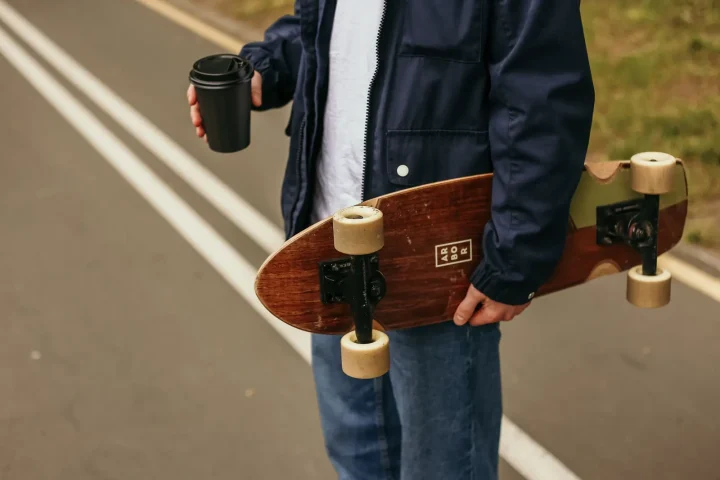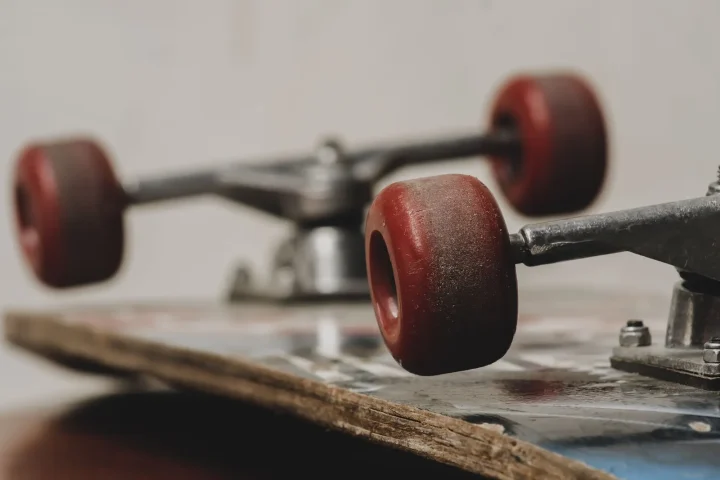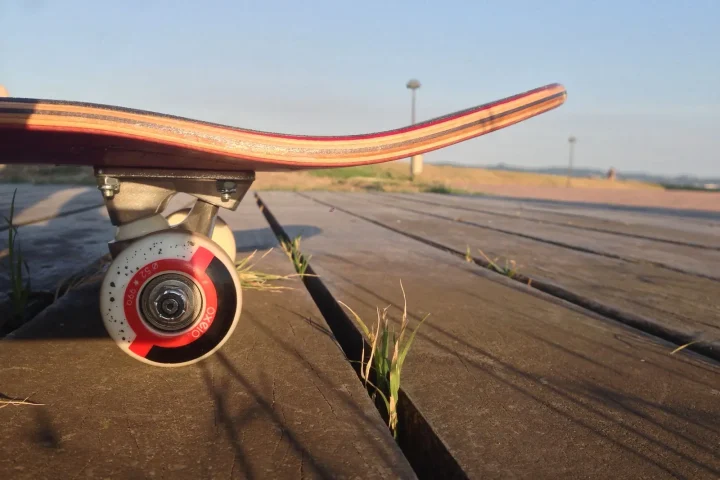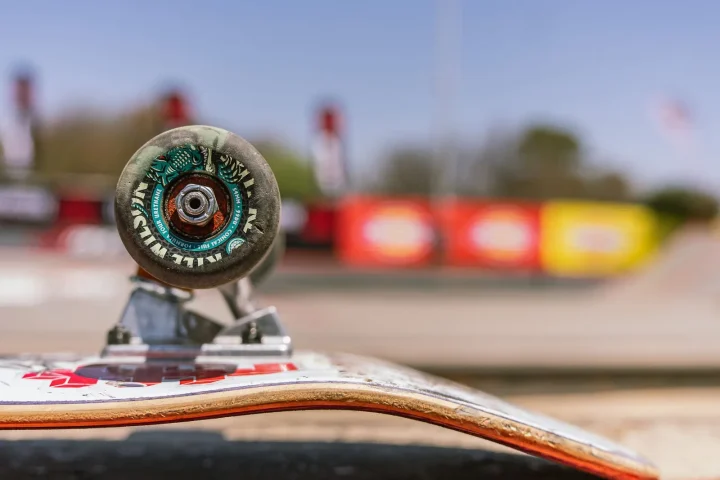
Search for a longboard for girls and you will find plenty of pink decks and flower graphics. What you will not find is an explanation of what actually makes a board suit you.
Here is the short answer. There is no such thing as a girls’ longboard or a women’s longboard. The best board for you is the one that fits your height, your shoe size and the way you want to ride. A graphic does not change how a board rides. Size and setup do.
That said, a few things are worth knowing if you are smaller or lighter than the rider most boards are set up for. This guide covers those, gives you a sizing chart with women’s shoe sizes, and suggests three beginner-friendly boards.
Quick answer
Choose by fit, not by label
Your height sets the length. Your shoe size sets the width. Your weight decides how the trucks should be set up.
- 📏 Length by height
- 👟 Width by shoe size
- ⚖️ Setup by weight
- 🎨 Then pick a design you love
Is there such a thing as a longboard for girls?
No. A longboard is a deck, two trucks and four wheels. None of those parts is built differently for women or men. Boards sold as being for girls are ordinary boards with a particular graphic.
So why does the question come up so often? Usually it stands for one of three real questions.
- Will this board be too big for me? A fair worry if you are shorter or have smaller feet than average.
- Will it be too heavy to carry? Boards vary a lot in weight.
- Is it beginner friendly? Many people asking are new to the sport.
All three have clear answers, and none of them has anything to do with the picture on the bottom of the deck. The rest of this guide takes them one at a time.
A board does not know who is riding it. It only responds to your height, your weight and where you put your feet.
Longboard size chart with women’s shoe sizes
Start with your height to find a length. Then use your shoe size to check the width. These are starting ranges for an all-round beginner board.
| Your height | Starting length | Notes |
|---|---|---|
| Under 5′0″ (under 152 cm) | 36–40 in | Lean toward the shorter end for easier carrying |
| 5′0″ to 5′4″ (152–163 cm) | 37–41 in | A 38 or 39 inch board is a comfortable fit |
| 5′5″ to 5′9″ (165–175 cm) | 38–42 in | The classic beginner range |
| 5′10″ and over (178 cm+) | 39–44 in | A longer deck suits a wider stance |
| US women’s shoe size | US men’s (approx.) | Deck width to look for |
|---|---|---|
| 8.5 and under | 7 and under | 8.5–9 in |
| 9 to 11 | 7.5 to 9.5 | 9–9.5 in |
| 11.5 and up | 10 and up | 9.5–10 in |
Why does width matter? You steer a longboard by pressing on your toes or your heels. If the deck is much wider than your feet, your toes and heels are a long way from the edges, and you have to lean further to make the board turn. A deck close to your foot length feels more responsive.
Most beginner boards are about 9 inches wide, which suits the majority of adult feet. If your feet are small, avoid the very wide 10 inch decks unless you want a relaxed, slow-turning cruiser.
Want a size based on your height, weight and riding style together?
What matters if you are a lighter rider
This is the part most guides skip, and it makes a real difference. Complete longboards are usually set up for a rider of roughly average adult weight. If you weigh a good deal less than that, three things are worth checking.
Bushings
Bushings are the rubbery rings inside each truck. They resist the board leaning. A heavier rider squashes them easily. A lighter rider may hardly squash them at all, which makes the board feel stiff and unwilling to turn.
If your board does not seem to turn however much you lean, the bushings are probably too hard for your weight. The first fix is free: loosen the large nut on each truck a quarter turn at a time. If that is not enough, softer bushings cost very little and take ten minutes to fit.
| Rider weight | Bushing hardness to try |
|---|---|
| Under 120 lb | Soft, about 80a to 87a |
| 120 to 160 lb | Soft to medium, about 85a to 88a |
| 160 to 200 lb | Medium, about 88a to 90a |
| 200 to 240 lb | Medium-hard, about 90a to 93a |
| Over 240 lb | Hard, about 93a to 96a |
Deck flex
Flex is how much a deck bends under you. A board that feels springy to a 180 lb rider can feel like a plank to someone who weighs 115 lb. If you want a comfortable, lively ride and you are light, look for decks described as flexible, such as those using bamboo.
Board weight
Complete longboards we checked ranged from about 6 lb to 10 lb. That gap matters when you carry a board up stairs or across a campus. If weight is a concern, check the item weight in the listing. Shorter boards and bamboo decks tend to be lighter. Drop decks and boards with very large wheels tend to be heavier.
💡 The quickest improvement for a light rider
Loosen your trucks. Most new boards arrive with the trucks tighter than a lighter rider needs. A quarter turn at a time, until the board leans easily but does not wobble.
Which type of longboard should you choose?
Your riding style matters more than anything else on this page. Here are the main beginner-friendly types.
| Type | What it is like | Best for |
|---|---|---|
| Drop-through | Low, steady and easy to push | Commuting, campus and nervous beginners |
| Pintail | Classic teardrop shape, flowing turns | Relaxed cruising and carving |
| Kicktail cruiser | A cruiser with an upturned tail | City riding and tight spaces |
| Mini cruiser | Very short and easy to carry | Short trips and public transport |
If you are unsure, a drop-through of about 38 to 40 inches is the safest first choice. The low deck makes balancing and pushing easier, and it is easy to step off.
A pintail is the board most people picture when they think of longboarding. It stands a little taller and turns in wide, smooth arcs. It suits relaxed rides along a seafront or a park path.
Not sure which style is yours? Our free Longboard Match Quiz takes about a minute.
Our picks: 3 beginner-friendly longboards
We chose these three for fit and ease of use: one for smaller riders, one that is light to carry, and one with a higher weight limit and a wood-grain finish.
🔎 How we chose these
We picked these boards by the specifications listed on Amazon and by how well they fit the job. We have not ride-tested them, and we do not show prices or star ratings because they change often. Specs were checked in October 2026, so confirm the details on the product page before you buy. LongboardHub earns from qualifying purchases as an Amazon Associate, at no extra cost to you. Read our affiliate disclosure.
🏆 Best for smaller riders
Shape illustration, not a product photo
Atom Pin-Tail Longboard (39 in)
Best for: Riders under about 5′5″ who want a classic, manageable first board.
A classic 39-inch pintail. The teardrop shape narrows toward the tail, which keeps the deck clear of the wheels in turns. The Amazon listing describes it as ideal for beginner riders.
- Length 39 in
- Width 9 to 9.4 in (the listing shows both)
- Deck Maple laminate pintail
- Trucks 8.5 in aluminum
- Wheels 65 mm, 78A
- Bearings ABEC 5
- Listed weight limit 220 lb
✅ Why it works
- At 39 inches it is easier to steer and carry than a 41 or a 44.
- Soft 78A wheels grip well and soak up small bumps.
- The pintail shape helps you avoid wheel bite, according to the listing.
- It is listed as arriving fully assembled.
⚠️ Keep in mind
- It is a top-mount board, so you stand higher than on a drop-through and pushing takes a little more effort.
- The 65 mm wheels are on the small side for very rough roads.
- The listed weight limit is 220 lb.
Buy from Amazon Price and stock are shown on Amazon. Specs are from the Amazon listing, checked October 2026.
🎒 Lightest to carry
Shape illustration, not a product photo
Volador Urban Freeride Pro Longboard (40 in)
Best for: Riders who will carry their board up stairs or across campus.
A light 40-inch drop-through with a shallow concave deck. The listing describes it as made for urban and campus commutes and casual cruising.
- Length 40 in
- Width 9 in
- Deck 8-layer maple with epoxy resin, drop-through
- Trucks Forged reverse kingpin
- Wheels 70 mm, 78A
- Bearings ABEC-9
- Listed weight limit 220 lb
✅ Why it works
- At a listed 6.2 lb it is light for a 40-inch board.
- The drop-through deck is low and easy to push.
- Soft 78A wheels absorb vibration, according to the listing.
⚠️ Keep in mind
- The listed weight limit is 220 lb.
- The 9-inch deck is narrow for very big feet.
- It is sold in several graphics. Our link opens one of them.
Buy from Amazon Price and stock are shown on Amazon. Specs are from the Amazon listing, checked October 2026.
🌳 Best wood-grain look
Shape illustration, not a product photo
Magneto Pintail Longboard (40 in)
Best for: Riders who want a natural finish and a higher listed weight limit.
A 40-inch pintail with a clear sand-grit finish that shows the wood. The listing describes it as surf-inspired and made for cruising and carving.
- Length 40 in
- Width 9.25 in
- Deck Bamboo and maple pintail
- Wheels 70 mm, 78A
- Listed weight limit 275 lb
✅ Why it works
- Forty inches sits in the middle of the beginner size range.
- Soft 70 mm, 78A wheels suit mixed pavement.
- The listed 275 lb weight limit is higher than many budget boards.
⚠️ Keep in mind
- It is a top-mount board, so you stand higher than on a drop-through.
- The listing gives no detail on the trucks or bearings.
- The listing marks its skill level as intermediate.
Buy from Amazon Price and stock are shown on Amazon. Specs are from the Amazon listing, checked October 2026.
| Product | Length | Width | Type | Amazon |
|---|---|---|---|---|
| Atom Pin-Tail 39 | 39 in | 9 to 9.4 in | Pintail | View on Amazon |
| Volador Freeride 40 | 40 in | 9 in | Drop-through | View on Amazon |
| Magneto Pintail 40 | 40 in | 9.25 in | Pintail | View on Amazon |
All three come in more than one design, and the designs change. Choose the board first. Then pick whichever graphic you like.
How to choose your longboard in 5 steps
- Measure your height and note your shoe sizeThese two numbers set the length and the width.
- Decide how you will rideCommuting and campus riding suit a drop-through. Relaxed cruising suits a pintail.
- Pick a length from the chartIf you will carry the board a lot, lean toward the shorter end of your range.
- Check the width and the weightAbout 9 inches suits most feet. Check the item weight if carrying matters to you.
- Plan to tune the trucksExpect to loosen them a little when the board arrives, especially if you are light.
Safety gear that actually fits
Gear only works if it fits, and fit is where smaller riders often struggle. A few pointers.
- Helmets are sized by head circumference. Measure around your head just above the eyebrows and use the maker’s chart. The helmet should sit level and should not rock.
- Knee pads are sized by the distance around your knee. Many brands go down to extra small or junior sizes.
- Wrist guards are sized by the distance around your hand at the knuckles.
- Pad sets are often sized by the wrist guard, so check all three measurements against the chart.
🛡️ Wear a helmet every ride
A helmet is the one piece of gear that is not optional. Wrist guards, knee pads and elbow pads are well worth it while you learn. Loose gear slides out of place in a fall, so take the time to measure. See our safety guides.
Real-life examples: which board would they choose?
The riders below are made-up examples, based on the kind of questions people often ask in longboarding groups and forums. They are not real people or reviews. See which one sounds most like you.
The petite beginner
Hana, 5′1″, 105 lb
Hana wants to learn but worries every board will be too big and too stiff.
Good choice: a board of about 37 to 39 inches and about 9 inches wide, with the trucks loosened and softer bushings if it still will not turn.
The campus rider
Imani, 5′6″, 140 lb
Imani wants to get between lectures and carry her board indoors.
Good choice: a light drop-through of about 38 to 40 inches. Low to push, steady and easy to carry.
The tall cruiser
Freya, 5′11″, 165 lb
Freya wants relaxed rides along the seafront at weekends.
Good choice: a pintail of about 42 to 44 inches. Her height suits a longer deck, and a pintail gives smooth, wide turns.
Common mistakes (and how to fix them)
❌ Choosing by graphic alone
The design does not change the size, the shape or the ride.
✅ The fix: Choose the size and type first. Then pick the design.
❌ Assuming smaller means easier
Very short boards are twitchy and harder to learn on.
✅ The fix: Stay in the range for your height. For most adults that is 37 inches or more.
❌ Leaving the trucks as they arrive
Factory settings are often too tight for a lighter rider.
✅ The fix: Loosen them a quarter turn at a time.
❌ Buying a very wide deck with small feet
You have to lean much further to turn it.
✅ The fix: Aim for about 9 inches unless you want a slow-turning cruiser.
❌ Guessing gear sizes
Loose pads and helmets do not stay where they should.
✅ The fix: Measure, and use the size chart.
Looking after your board
A longboard needs very little maintenance, but a few habits make it last much longer and ride much better.
- Keep it dry. Water rusts bearings and damages wooden decks. If the board gets wet, dry it and spin the wheels.
- Check the bolts. Vibration loosens truck bolts and axle nuts over time. A quick check every few weeks is enough.
- Clean the bearings when the wheels sound gritty or stop spinning freely.
- Swap the wheels around now and then, so they wear evenly.
- Replace worn bushings. Cracked or squashed bushings make a board feel sloppy, and new ones cost very little.
- Store it indoors. Heat, cold and damp all shorten the life of a deck.
For step-by-step help, see our maintenance guides.
Key terms in plain English
Longboard listings use a lot of jargon. Here are the terms used in this guide, explained simply.
| Term | What it means |
|---|---|
| Deck | The board you stand on. Usually made from layers of maple or bamboo. |
| Trucks | The two metal T-shaped parts under the deck. They hold the wheels and let the board turn when you lean. |
| Bushings | The rubbery rings inside each truck. Softer ones let the board lean easily. Harder ones resist. |
| Flex | How much the deck bends under your weight. Some flex is comfortable. Stiff is steadier at speed. |
| Drop-through | A deck with holes that the trucks mount through, so the deck sits lower. |
| Pintail | A teardrop-shaped top-mount deck with a pointed tail. A classic shape for cruising and carving. |
| Kicktail | An upturned end of the deck. Pressing on it lifts the front wheels for tight turns, kerbs and tricks. |
| Durometer | Wheel hardness, shown as a number and the letter A. Around 78A is soft and grippy. The mid 80s and above are firmer. |
| Wheelbase | The distance between the front and back trucks. Longer feels steadier. Shorter turns tighter. |
| Foot brake | Slowing down by lowering your back foot and dragging the sole lightly on the ground. |
Frequently asked questions
Is there a difference between longboards for girls and boys?
No. Longboards are not built differently for girls or boys, or for women or men. Boards marketed that way differ only in their graphics. Choose by height, shoe size, weight and riding style.
What size longboard should a woman get?
It depends on height, not gender. As a starting point: under 5 ft, about 36 to 40 inches. From 5 ft to 5 ft 4 in, 37 to 41 inches. From 5 ft 5 in to 5 ft 9 in, 38 to 42 inches. Taller riders can go up to 44 inches.
What is the best longboard for a beginner?
A drop-through of about 38 to 40 inches with soft wheels is the easiest first board for most people. The low deck makes balancing, pushing and stepping off easier.
Why does my longboard not turn?
The trucks are probably too tight, or the bushings are too hard for your weight. Loosen the large nut on each truck a quarter turn at a time. If that is not enough, fit softer bushings. This is common for lighter riders.
Are longboards heavy to carry?
The complete boards we checked weighed between about 6 and 10 lb. Shorter boards and bamboo decks are usually lighter. Check the item weight in the listing if you will carry the board often.
Your longboard checklist
Tick these off and you will have a board that fits.
- The length suits my height.
- The width suits my shoe size.
- The type suits how I want to ride.
- I have checked the board’s weight if I will carry it often.
- The listed weight limit is above my weight.
- I know how to loosen the trucks.
- I have a helmet that fits.
- I chose the design last.
The best longboard for girls and women is simply the best longboard for you. Get the fit right, tune the trucks to your weight, and then choose whatever design makes you smile every time you pick it up.
Still deciding?
Get a size worked out for you, or jump back to the picks.
Try the free Size Guide Take the Match Quiz Back to our picks
Product specs and availability were checked in October 2026 and can change. Always confirm the details on the product page before you buy.