An electric longboard sounds like the perfect commuter. No pushing, no sweat, and hills stop being a problem. Then you look at the prices and wonder whether the cheap ones are a bargain or a mistake.
Here is the short answer. The cheapest electric boards start at around $200, but a true full-length electric longboard of about 38 inches usually costs closer to $350 to $400. Below that, you are mostly looking at shorter boards with a single motor.
This guide explains what you get at each price, how to read the numbers in a listing, and which safety features you should never give up to save money. Then it gives you two boards to look at. Prices are from Amazon in October 2026 and will change.
Quick answer
About $200 to start, about $380 for a real longboard
Do not judge by top speed. For a first electric board, battery safety, braking and a sensible range matter far more.
- 🔋 UL2272 battery safety
- 📏 38 in for a true longboard
- 🛣️ Range: read it as a best case
- ⛑️ Helmet, always
What counts as a cheap electric longboard?
Electric boards cost a lot more than ordinary longboards, because you are also buying motors, a battery, a speed controller and a remote. So cheap is relative.
| Tier | Typical price | What you usually get |
|---|---|---|
| Entry | About $200–$250 | A short deck of 28 to 32 inches, one motor, modest speed and range |
| Budget longboard | About $350–$400 | A 38 inch deck, hub motors, a listed range of about 11 to 13 miles |
| All-terrain and performance | About $700 and up | Big wheels, powerful motors, long range |
The entry tier is where the lowest prices are. Those boards are real and they work, but most of them are short. If you want the stable, wide stance of a longboard, look at the second tier.
Is the second tier still cheap? For an electric longboard, yes. It is roughly half the price of the performance boards, and it is where most first-time buyers end up.
How to read an electric longboard listing
Electric board listings are full of numbers. Some matter a lot. Some are mostly marketing. Here is how to tell them apart.
| Spec | What it means | What to look for |
|---|---|---|
| Motor power (W) | How strong the motors are | Two motors climb hills better than one |
| Battery (Wh) | How much energy the battery holds | More watt-hours means more range and more weight |
| Listed range | How far it goes in ideal conditions | Expect noticeably less in real use |
| Listed top speed | The fastest it can go | Far more than a beginner needs |
| Speed modes | Settings that cap speed and power | At least one gentle mode for learning |
| UL2272 | A safety standard for the electrical system | Look for it on every board |
| IP rating | Resistance to dust and water | Splash resistance is not the same as waterproof |
| Weight limit | The heaviest rider the board is rated for | Comfortably above your weight |
Motor power
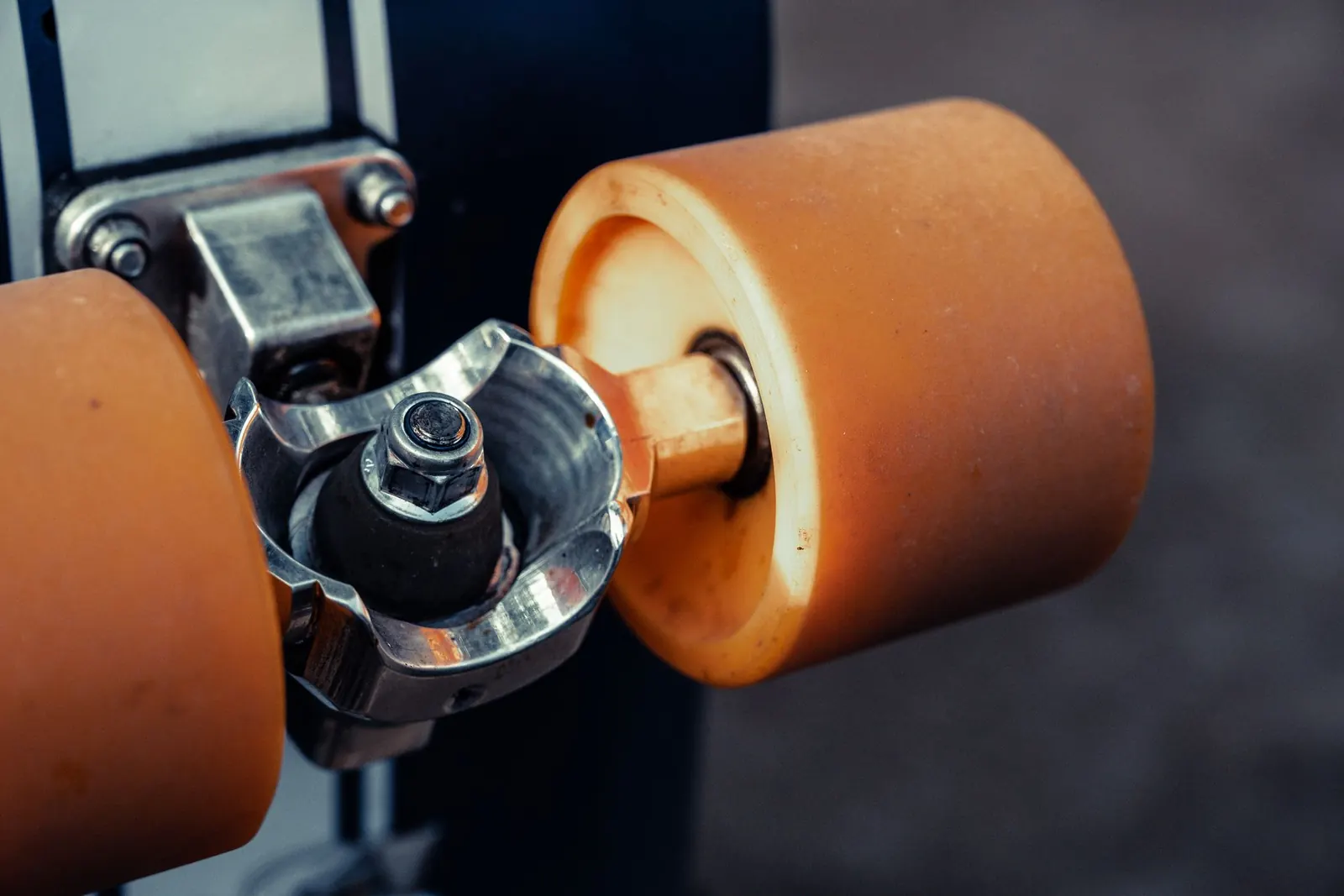
Power is given in watts. Budget boards use hub motors, which are built into the wheels. They are quiet and need little maintenance. A single 350 W motor is fine on flat ground. Two motors give better grip, stronger braking and more pull on hills.
Battery and range
Battery size is given in watt-hours, shortened to Wh. A bigger number means more stored energy. The range in the listing is nearly always a best case: a light rider, flat smooth ground, a steady moderate speed and mild weather.
Real range is lower. Hills, stop-start riding, cold weather, a heavier rider and higher speeds all reduce it. A sensible rule is to plan on about two thirds of the listed figure, and less in winter.
Top speed
Listings love a big top speed. Some budget boards claim 25 to 29 mph. That is faster than most cyclists ride, on a plank with small wheels and no suspension. A fall at that speed is serious.
A beginner should ride at 10 to 12 mph or less, which is what the lowest speed mode is for. Treat the top speed as a number you may never use.
Braking
Electric boards brake through the motors, controlled by the remote. Good braking is smooth and progressive. Jerky braking can throw you forward. Listings rarely tell you much here, which is one reason well-known brands are a safer choice.
Two things to know. Braking is weaker at very low battery on some boards. And motor braking does not replace knowing how to step off or foot brake in an emergency.
The safety features you should not give up
Saving money on the deck or the wheels is fine. Saving money on the battery is not.
UL2272 certification
UL2272 is a safety standard for the electrical systems of personal e-mobility devices, including the battery and charger. It exists because poorly made lithium batteries can overheat and catch fire. Look for UL2272 in the listing. Both boards in our picks state it. We left out one popular 38 inch board because the listing text we read did not mention it.
Safe charging habits
- Use only the charger that came with the board.
- Charge on a hard, clear surface, away from anything flammable.
- Do not leave the board charging unattended or overnight.
- Do not charge a board that is wet, damaged or very cold.
- Unplug it once it is full.
Water resistance
Some boards list an IP rating. IPX5, for example, means resistance to water jets. It does not mean the board can be ridden through deep puddles or left in the rain. Water and electronics are a poor mix, and wet roads are slippery. Riding in the rain is best avoided.
🛡️ Wear a helmet, and consider more
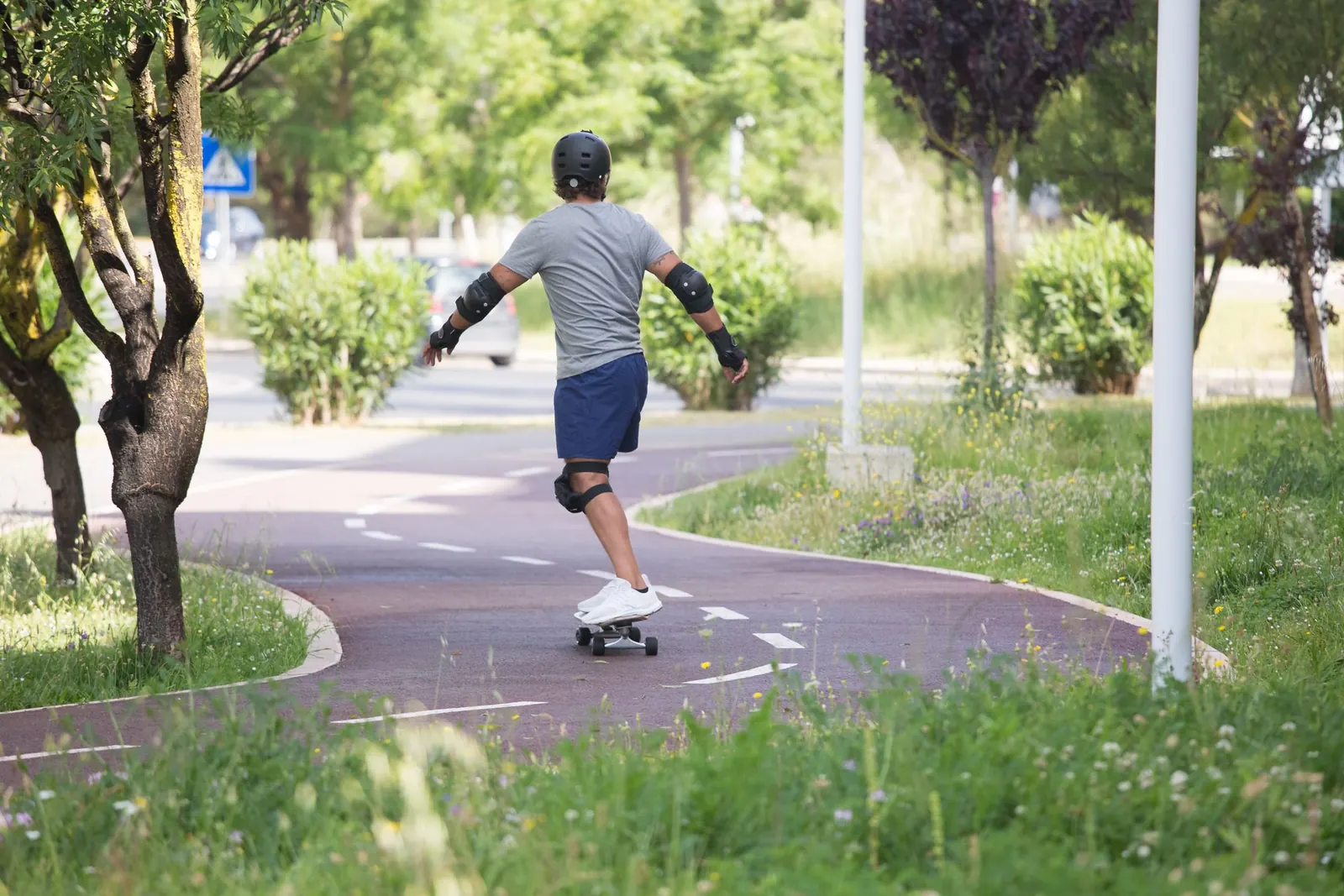
Electric boards reach speeds where a fall does real damage. A certified helmet is the minimum. Wrist guards, knee pads and elbow pads are sensible, and many riders choose a full-face helmet. See our safety guides.
⚠️ Check your local rules
Laws on electric skateboards differ widely between countries, states and cities. Some places restrict where you can ride, how fast, or whether you can ride at all. Check before you buy.
What you give up on a cheap electric board
It helps to be honest about the trade-offs. This is what tends to separate a budget electric board from an expensive one.
| Feature | Budget board | Premium board |
|---|---|---|
| Range | Roughly 9 to 17 miles listed | Often 20 miles or more listed |
| Motors | One or two hub motors | Powerful hub or belt-drive motors |
| Ride comfort | Firm, especially on rough roads | Bigger wheels or flexible decks |
| Braking feel | Varies a lot between brands | Usually smoother and stronger |
| Support and spares | Can be hard to find | Usually better |
| Weight | About 14 to 18 lb | Often heavier |
The biggest hidden difference is support. An electric board has parts that wear out or fail: batteries, remotes, motor sleeves. With an established brand you can usually get spares and help. With an unknown brand, a dead remote can turn the whole board into a heavy ordinary skateboard.
The second is ride comfort. Hub motors have less urethane on the wheel than a normal wheel does, so the ride is firmer. On smooth paths that is fine. On cracked pavement you will feel it.
Our picks: 2 budget electric boards
One of these is a true entry-level board at the lowest price tier. The other is a full-length 38 inch electric longboard from a brand that has been making electric boards for years. Both listings state UL2272.
We only wanted to suggest boards whose listings state the battery safety standard, which is why this list is short.
🔎 How we chose these
We picked these boards by the specifications listed on Amazon and by how well they fit the job. We have not ride-tested them, and we do not show prices or star ratings because they change often. Specs were checked in October 2026, so confirm the details on the product page before you buy. LongboardHub earns from qualifying purchases as an Amazon Associate, at no extra cost to you. Read our affiliate disclosure.
💰 Lowest-cost entry point
ASKATE A1 Electric Skateboard (31.5 in)
Best for: Lighter riders and teens who want to try electric riding on flat ground.
A budget electric board with a single 350 W motor and a remote that shows speed and battery level. The listing describes it as suitable for teens and beginners.
- Deck 31.5 x 8.27 in, 8-layer Canadian maple
- Motor Single 350 W
- Listed range Up to 17 miles at steady speed
- Battery UL2272 certified
- Charge time 3.5 hours
- Listed weight limit 264 lb
- Weight 6.5 kg
✅ Why it works
- A single 350 W motor keeps the power modest for new riders.
- The battery is listed as UL2272 certified.
- It stores upright to save space, according to the listing.
⚠️ Keep in mind
- At 31.5 inches it is shorter than a true longboard.
- A single motor is slower on hills than a twin-motor board.
- Range claims assume ideal conditions.
Buy from Amazon Price and stock are shown on Amazon. Specs are from the Amazon listing, checked October 2026.
🏆 Best budget electric longboard
Backfire G2 Black Electric Skateboard (38 in)
Best for: New riders who want a full-length deck and a well-known brand.
A full-length 38-inch electric board. The listing describes it as beginner friendly but powerful, with a speed controller made by Hobbywing.
- Deck 38 x 9 in, 8-ply maple
- Battery 187 Wh, UL2272 compliant
- Listed range Up to 12.5 miles
- Charge time 3.5 hours
- Wheels 96 mm, 80A
- Listed weight limit 265 lb
- Weight 7.6 kg
✅ Why it works
- A 38-inch deck gives a proper longboard stance.
- Big 96 mm wheels handle rough pavement.
- The battery pack is listed as UL2272 compliant.
- The listing marks its skill level as beginner and up.
⚠️ Keep in mind
- Range claims assume ideal conditions. Expect less with hills, cold weather or a heavier rider.
- At 7.6 kg it is heavy to carry.
- Check your local rules for electric skateboards before you ride.
Buy from Amazon Price and stock are shown on Amazon. Specs are from the Amazon listing, checked October 2026.
| Product | Deck | Listed range | Charge time | Amazon |
|---|---|---|---|---|
| ASKATE A1 | 31.5 in | Up to 17 miles | 3.5 hours | View on Amazon |
| Backfire G2 Black | 38 in | Up to 12.5 miles | 3.5 hours | View on Amazon |
Which one should you choose?
- You want the lowest price and ride on the flat: the ASKATE A1. Remember it is a shorter board with a single motor.
- You want a proper longboard stance: the Backfire G2 Black.
- You have steep hills on your route: look for a twin-motor board, and check its listing for UL2272 before you buy.
How to choose a cheap electric longboard in 5 steps
- Measure your tripWork out the round-trip distance you need. Then choose a board whose listed range is at least one and a half times that.
- Check the hillsFlat routes suit any board. Real hills call for two motors.
- Insist on UL2272Do not buy a board that does not mention it.
- Check the weight limit and the board weightThe rider limit should be above your weight. The board itself should be light enough for you to carry up stairs.
- Favour a brand you can reachLook for a maker with a track record, spares and a way to contact support.
Your first rides on an electric board
Electric boards feel very different from pushing. The board moves under you instead of with you. Take the first sessions slowly.
- Learn to ride without power firstIf you have never skated, practise standing, balancing and stepping off on a normal board or with the motor off.
- Use the lowest speed modeMost electric boards have more than one mode. Start with the gentlest.
- Bend your knees and lean forward to accelerateThe board pulls away under you. Leaning slightly forward keeps you over it.
- Lean back to brakeWhen the motors brake, your body wants to carry on. Shift your weight back and bend your knees.
- Practise in an empty spaceA quiet car park or wide path is ideal. Stay away from traffic until starting and stopping are automatic.
- Watch the batteryTurn for home with plenty of charge left. A flat battery means pushing a heavy board.
Looking after an electric board
- Keep it dry. Wipe it down after damp rides and never store it wet.
- Store it partly charged. For long breaks, most makers suggest storing the battery at around half charge, not empty and not full. Check your manual.
- Avoid extreme heat and cold. A hot car is hard on batteries.
- Check the bolts. Motors add vibration, so hardware loosens faster than on a normal board.
- Listen for changes. New noises from a wheel or motor are worth investigating early.
How long does the battery last?
Every lithium battery slowly loses capacity as it is charged and used. After a few hundred full charges, most will hold noticeably less than when new. You can slow this down by avoiding extreme temperatures, not leaving the board flat for long periods and not storing it fully charged for weeks. When the range drops too far, a replacement battery from the maker is usually the fix, which is another reason to choose a brand that sells spares.
Real-life examples: which board would they choose?
The riders below are made-up examples, based on the kind of questions people often ask in longboarding groups and forums. They are not real people or reviews. See which one sounds most like you.
The student
Maya, 130 lb, flat campus
Maya wants to get between buildings faster and has a small budget.
Good choice: an entry-tier board with a single motor. Her routes are short and flat, and she is light, so modest power is enough.
The commuter
Luis, 185 lb, three miles each way
Luis has one long hill on his route and no shower at work.
Good choice: a 38 inch board with two motors and a listed range of 11 miles or more. That leaves a margin for the hill and the return trip.
The cautious parent
Sara, buying for a 15-year-old
Sara is worried about speed and battery safety.
Good choice: a UL2272 board from a known brand with a low speed mode, a helmet and pads, and a clear rule about where it can be ridden.
Common mistakes (and how to fix them)
❌ Choosing by top speed
High speed is the least useful and most dangerous number for a beginner.
✅ The fix: Choose by safety certification, range and braking instead.
❌ Believing the listed range
Listed range assumes ideal conditions.
✅ The fix: Plan on about two thirds of it.
❌ Skipping battery certification
Uncertified lithium batteries are a fire risk.
✅ The fix: Only buy boards that mention UL2272.
❌ Expecting a longboard and getting a short board
Many of the cheapest boards are only 28 to 32 inches long.
✅ The fix: Check the deck length before you buy.
❌ Riding in full power mode on day one
The acceleration can throw a new rider off the back.
✅ The fix: Stay in the lowest mode until you are completely comfortable.
Key terms in plain English
Longboard listings use a lot of jargon. Here are the terms used in this guide, explained simply.
| Term | What it means |
|---|---|
| Hub motor | An electric motor built into a wheel. Quiet and low maintenance. |
| Deck | The board you stand on. Usually made from layers of maple or bamboo. |
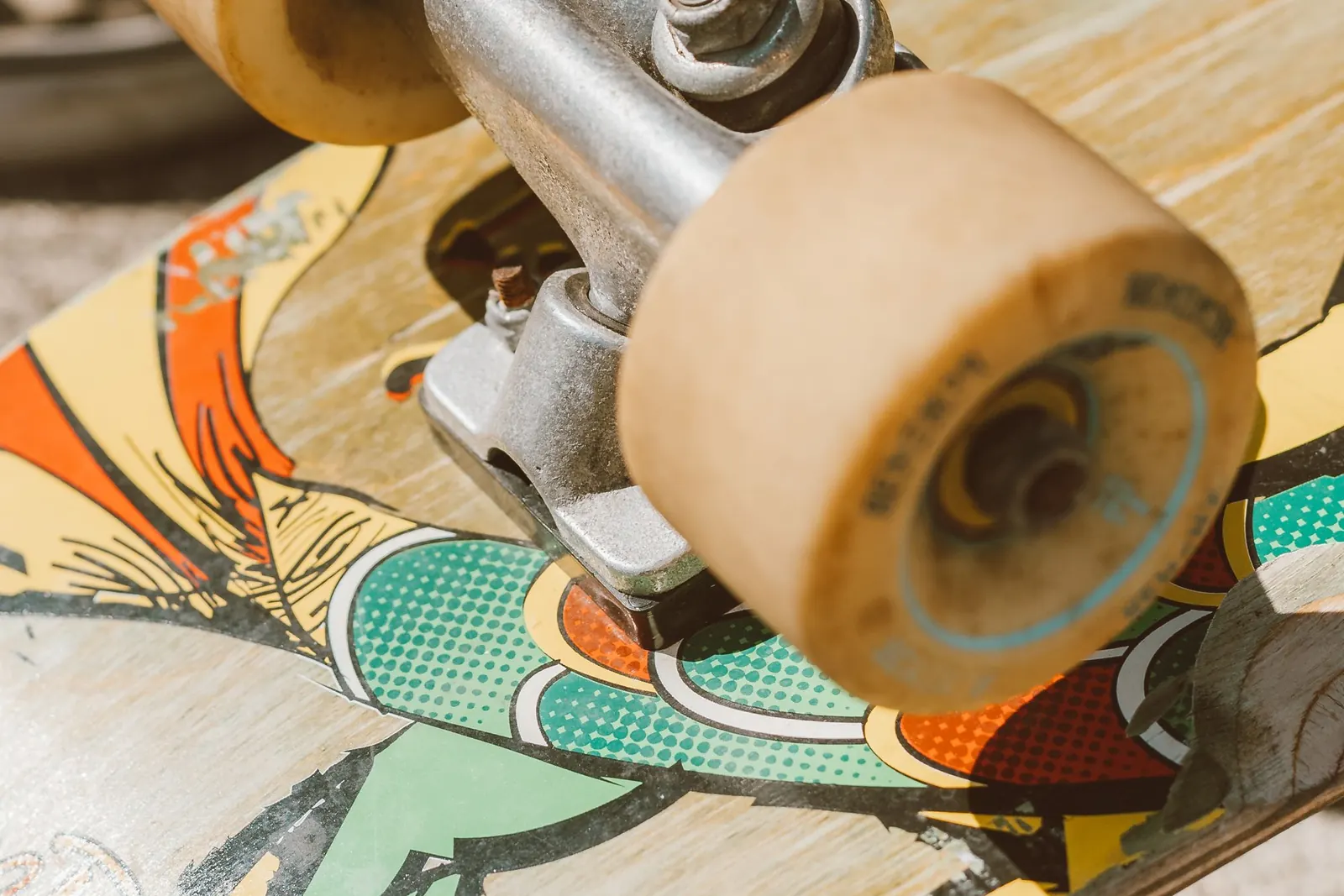
| Trucks | The two metal T-shaped parts under the deck. They hold the wheels and let the board turn when you lean. |
| Durometer | Wheel hardness, shown as a number and the letter A. Around 78A is soft and grippy. The mid 80s and above are firmer. |
| Wheelbase | The distance between the front and back trucks. Longer feels steadier. Shorter turns tighter. |
| Foot brake | Slowing down by lowering your back foot and dragging the sole lightly on the ground. |
| Complete | A board sold fully assembled, with deck, trucks, wheels and bearings ready to ride. |
Frequently asked questions
What is the best cheap electric longboard?
For a true full-length electric longboard on a budget, look at 38 inch boards from established brands at around $350 to $400, with a UL2272 battery and a low speed mode. The cheapest boards, at around $200, are usually shorter decks with one motor.
How much does a cheap electric longboard cost?
Entry-level electric boards start at about $200 to $250. Full-length 38 inch electric longboards from known brands usually cost about $350 to $400. These are approximate prices from October 2026.
Are cheap electric longboards safe?
They can be, if you choose carefully. Look for UL2272 certification for the electrical system, use the supplied charger, do not charge unattended, and always wear a helmet. Avoid boards that give no safety certification.
How far can a cheap electric longboard go?
Budget boards typically list a range of about 9 to 17 miles. Real-world range is lower and depends on rider weight, hills, speed and temperature. Planning on about two thirds of the listed range is sensible.
Can a beginner ride an electric longboard?
Yes, with care. Start in the lowest speed mode in an empty space, learn to accelerate and brake smoothly, and wear a helmet and pads. It helps to learn basic balance on an ordinary board first.
Your cheap electric longboard checklist
Do not order until you can tick these off.
- The listing mentions UL2272.
- The deck length is what I want.
- The listed range is at least one and a half times my round trip.
- It has a low speed mode for learning.
- The weight limit is above my weight.
- I can carry the board when I need to.
- I know the rules where I live.
- I have a certified helmet.
A cheap electric longboard can be a great buy if you choose with your head. Put battery safety first, be realistic about range, ignore the top speed, and start slowly. Do that, and a budget board will carry you a long way.
Still deciding?
Not sure whether electric or a normal longboard suits you better? Our free quiz can help.
Try the free Size Guide Take the Match Quiz Back to our picks
Product specs and availability were checked in October 2026 and can change. Always confirm the details on the product page before you buy.