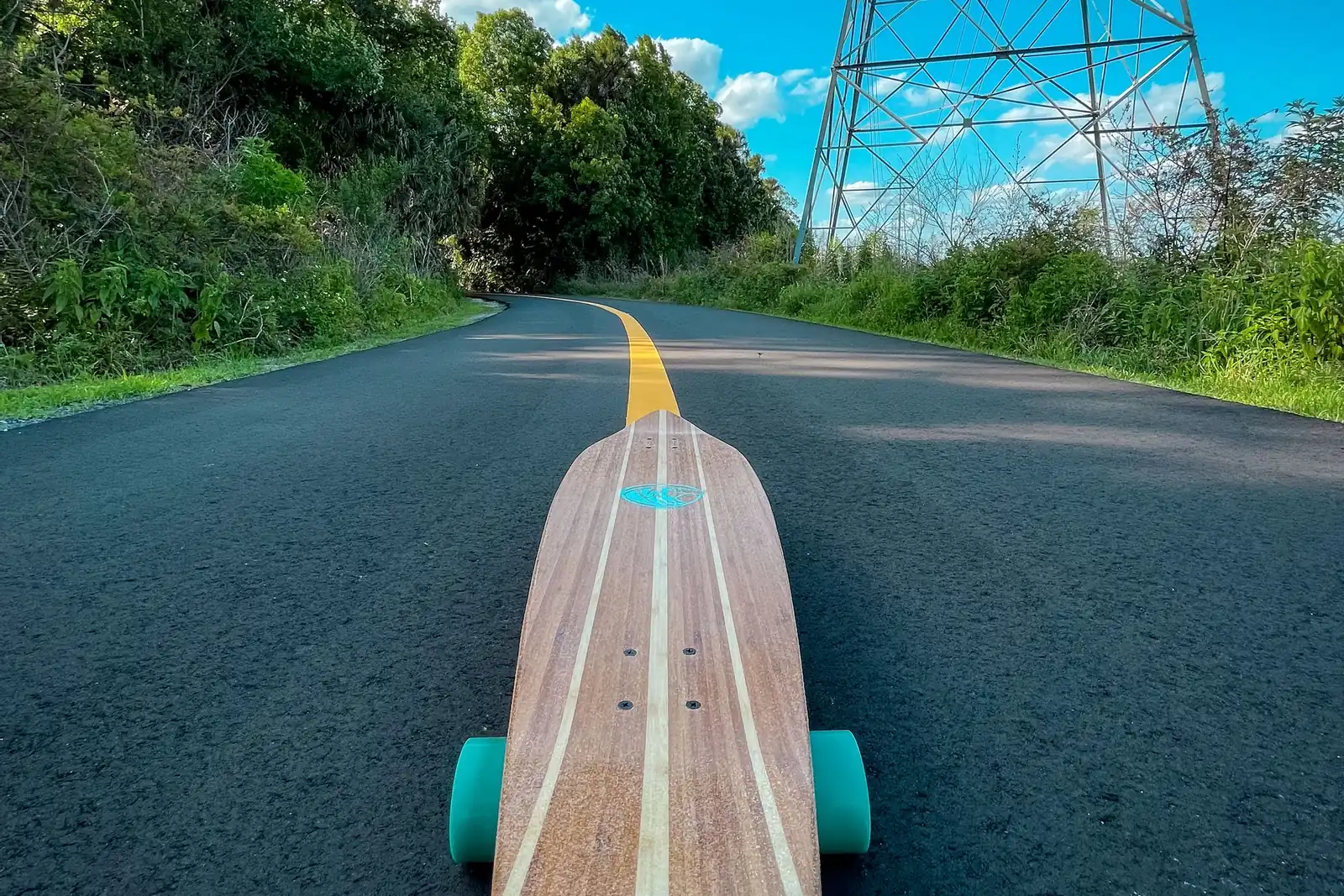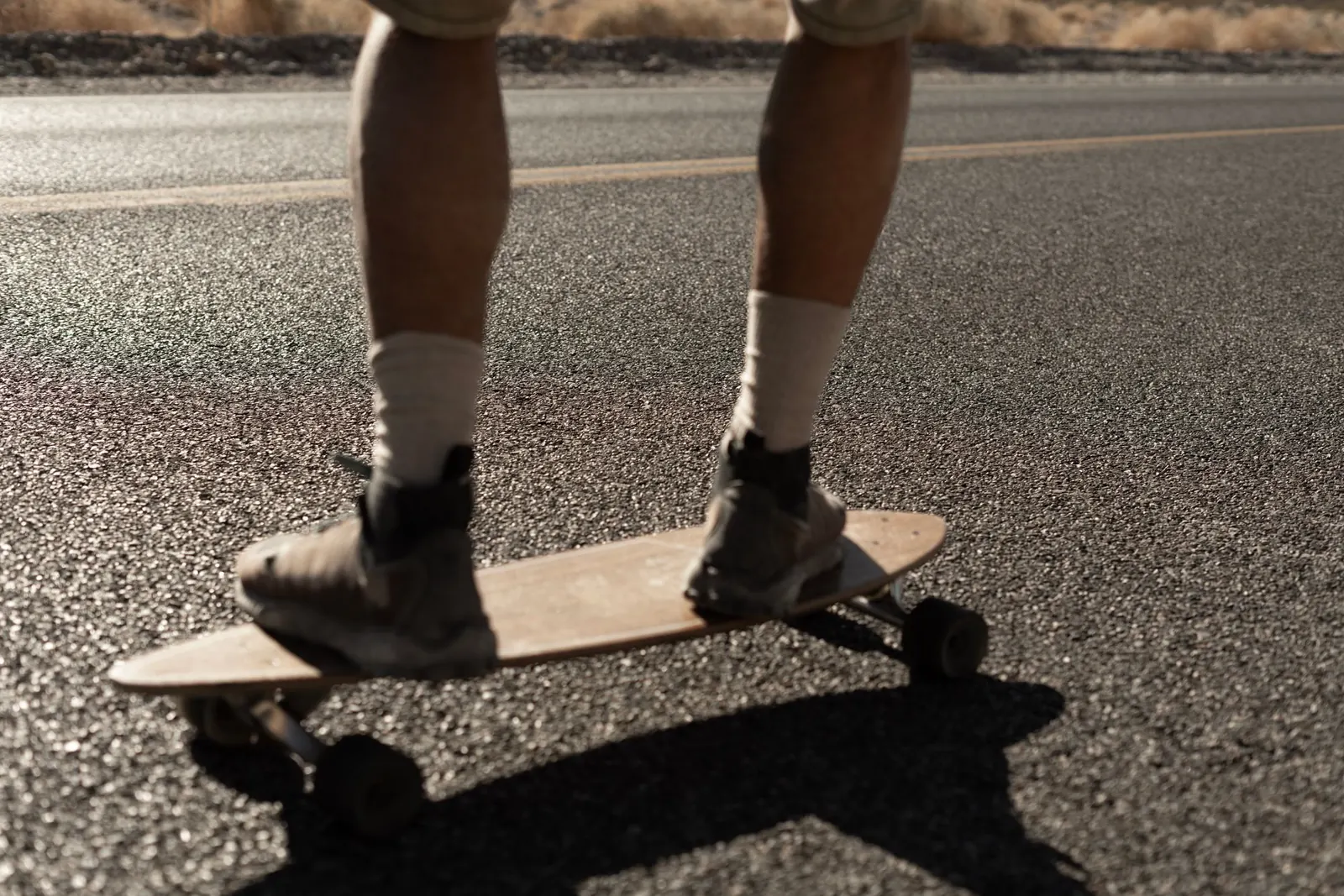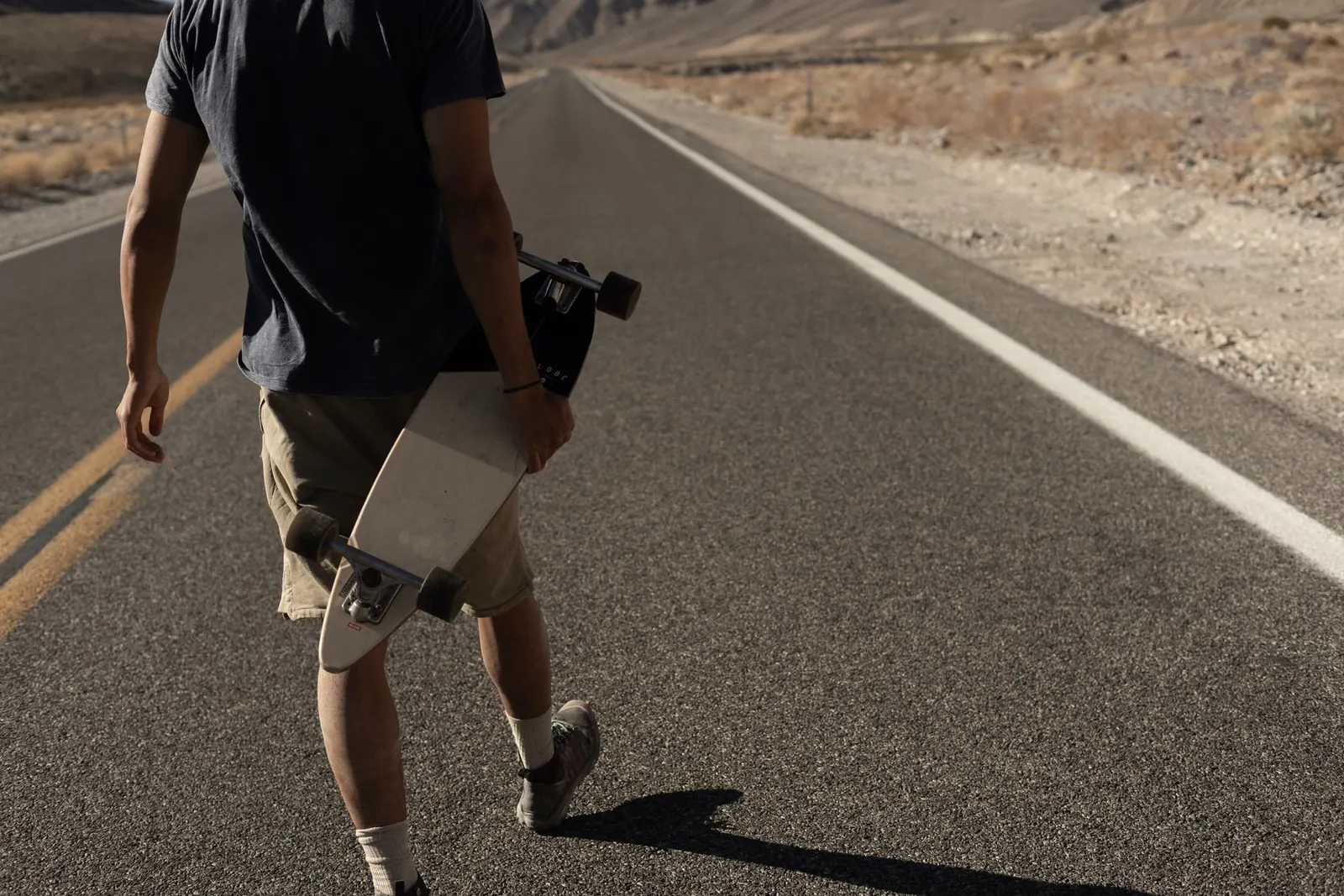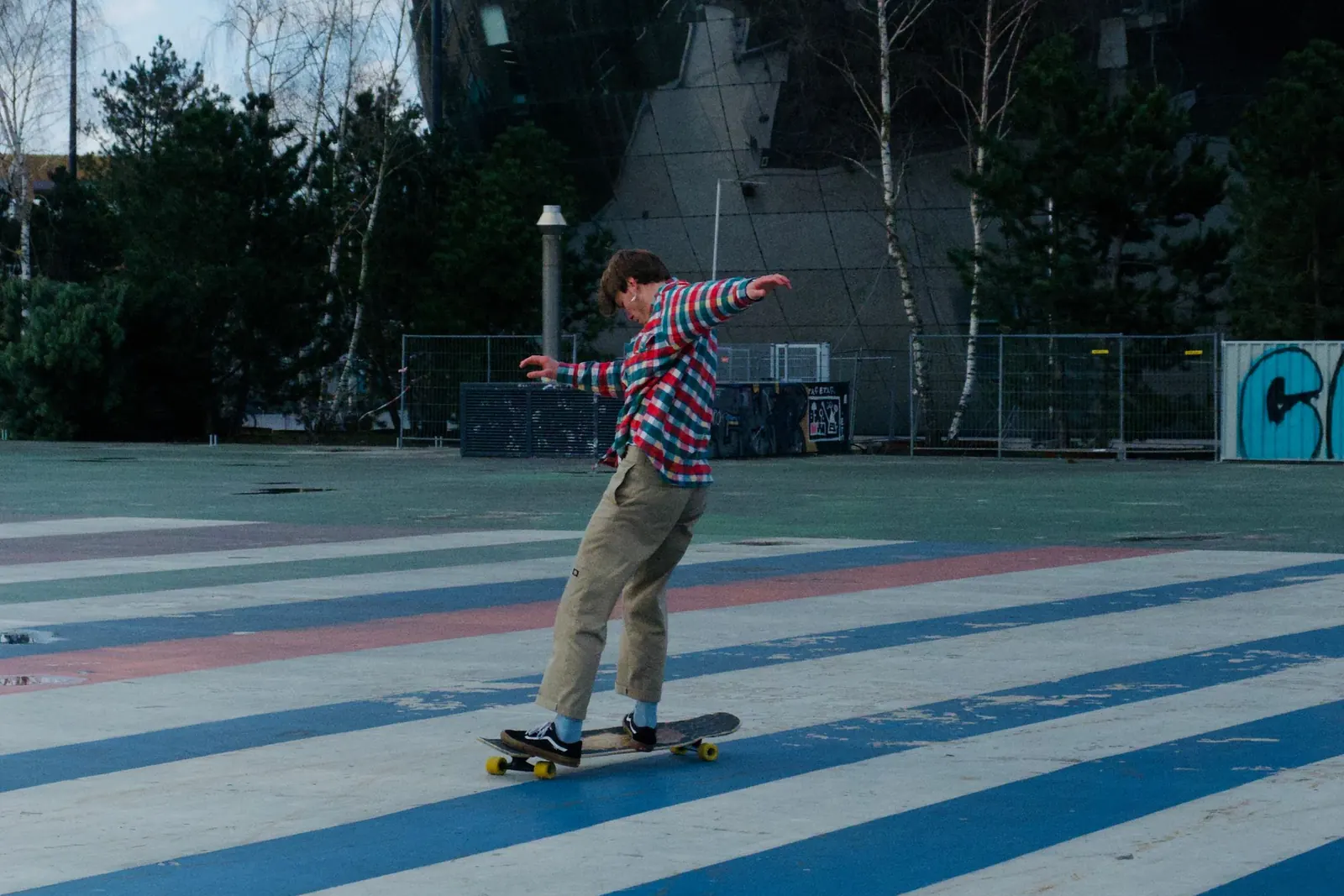
Carving is the reason many people fall for longboarding. You lean, the board swings into a turn, you lean the other way, and suddenly a plain stretch of tarmac feels like a wave or a ski slope.
Here is the short answer. The best longboard for carving turns easily, grips hard and springs back out of each turn. That usually means a top-mount or cut-out deck with some flex, soft grippy wheels, and reverse kingpin trucks with a 50-degree baseplate.
This guide explains what makes a board carve well, how carving differs from plain cruising, and which three boards are worth a look. It also covers the simple setup changes that make almost any board carve better.
Quick answer
Easy to turn, hard to slip, quick to spring back
Look for a deck with some flex, wheels around 70 mm and 78A, and trucks that lean without a fight.
- 🌊 Flex and camber
- 🛞 Wheels: 65–75 mm, 78A
- 📐 Trucks: 50°
- 📏 Length: 34–42 in
What makes a longboard good for carving?
Carving means linking turns, one into the next, in a smooth S-shape. A good carving board helps with each part of that.
- It turns easily. You should be able to lean into a turn without forcing it.
- It grips. In a hard turn the wheels are pushed sideways. Grippy wheels hold the line instead of sliding out.
- It springs back. A deck with flex stores a little energy in the turn and returns it as you come out. That rebound is what makes carving feel alive.
- It has clearance. In a deep lean, the wheels move toward the deck. If they touch it, the board stops. A carving board is shaped to avoid that.
| Feature | Look for | Why it matters |
|---|---|---|
| Mounting | Top-mount, or drop-through with large cutouts | Leverage over the trucks and room for the wheels |
| Flex | Medium, ideally with camber | Rebound out of each turn |
| Trucks | Reverse kingpin, 50° baseplate | Turns readily at cruising speed |
| Bushings | Soft to medium for your weight | Lets the truck lean deeply |
| Wheels | 65–75 mm, about 78A, square edges | Soft urethane and a sharp edge grip best |
| Length | 34–42 in | Shorter turns tighter, longer flows wider |
How carving works
A longboard has no steering wheel. You steer by leaning. When you press on your toes or your heels, the deck tilts, and the trucks turn that tilt into a change of direction.
In a carve, you lean one way, hold it through the turn, then roll your weight across the board and lean the other way. Each turn scrubs a little speed. That is why carving is the first way most riders learn to control their speed on a gentle hill.
Carving also has a cousin called pumping. In a pump, you push down and forward through each turn in rhythm. Done well, it adds speed instead of losing it, and a rider can keep moving on flat ground without ever putting a foot down. A lively, flexible deck makes pumping much easier.
| Style | What you do | What the board needs |
|---|---|---|
| Cruising | Roll along and turn when you need to | Stability and comfort |
| Carving | Link deep turns from edge to edge | Easy turning, grip and rebound |
| Pumping | Drive through turns to build speed | A springy deck and very responsive trucks |
The features that matter, explained
Mounting: top-mount vs drop-through
On a top-mount board, the deck sits on top of the trucks. Your feet are higher and directly above them, which gives you the most leverage. A small lean produces a strong turn. This is why many dedicated carving boards, including classic pintails, are top-mounts.
A drop-through board mounts the trucks through the deck, so you stand lower. It is steadier and easier to push, but it turns a little less eagerly. Carving-focused drop-throughs make up for this with large cutouts around the wheels, which allow a deeper lean.
Flex and camber
Flex is how much the deck bends under your weight. Camber means the deck arches slightly upward in the middle when nobody is standing on it. Put the two together and you get a spring. Your weight flattens the arch in a turn, and it pushes back as you come out.
Flex has to match your weight. A deck that feels perfectly springy to a light rider can sag under a heavy one. Premium boards are often sold in two flex ratings for this reason.
Trucks and bushings
Reverse kingpin trucks are the standard for longboards, and a 50-degree baseplate is the standard for carving. At 50 degrees, the truck turns a lot for a small lean.
Inside each truck are two rubbery rings called bushings. They decide how easily the truck leans. Soft bushings let the board dive into a turn. Hard ones resist. For carving you want bushings on the softer side for your weight, so the board leans freely but does not flop.
Some carving boards use double-kingpin trucks. These have two pivot points instead of one, so they turn much more sharply. They are great fun at low speed and feel unstable when you go fast.
Wheels
Carving wheels need grip. Three things give it to you. Soft urethane, at around 78A, sticks to the road. A wide contact patch puts more rubber down. And a square, sharp edge digs in where a rounded edge would let go. Size is usually 65 to 75 mm. Bigger wheels roll better. Smaller ones leave more clearance.
Wheel bite and clearance
Wheel bite is what happens when a wheel touches the deck in a turn. The wheel stops instantly and the rider usually does not. Carving boards avoid it in three ways: by narrowing the deck near the wheels, as a pintail does, by cutting the deck away around them, or by carving shallow hollows called wheel wells into the underside.
⚠️ Check for wheel bite before you ride hard
Stand beside the board, press one edge down as far as it goes and see whether the wheel touches the deck. If it does, tighten the trucks a little or add riser pads.
Our picks: 3 longboards for carving
These three take different routes to a good carve: a springy composite deck, a set of double-kingpin trucks, and a classic budget pintail.
🔎 How we chose these
We picked these boards by the specifications listed on Amazon and by how well they fit the job. We have not ride-tested them, and we do not show prices or star ratings because they change often. Specs were checked in October 2026, so confirm the details on the product page before you buy. LongboardHub earns from qualifying purchases as an Amazon Associate, at no extra cost to you. Read our affiliate disclosure.
🏆 Best premium carver
Shape illustration, not a product photo
Loaded Icarus (38.4 in)
Best for: Riders who want deep, energetic turns and plan to learn pumping.
Loaded describes the Icarus as a performance longboard for snowboard-style carving, pumping, freeride, freestyle and commuting. Its cambered bamboo and fiberglass deck is built to flex and spring back.
- Length 38.4 in
- Width 8.6 in
- Deck Bamboo and fiberglass with cork, drop-through, cambered
- Trucks Paris 180 mm, 50°
- Wheels 80 mm (as listed)
- Flex Options by rider weight
✅ Why it works
- The cambered, flexible deck gives an energetic feel in turns.
- Drop-through mounting adds stability and easier pushing.
- Cutouts leave room for big wheels.
- Paris trucks and Orangatang bushings are fitted.
⚠️ Keep in mind
- It costs several times more than a budget complete.
- An 8.6-inch deck is narrow for big feet.
- Pick the flex that matches your weight, as the listing explains.
Buy from Amazon Price and stock are shown on Amazon. Specs are from the Amazon listing, checked October 2026.
🌊 Best for tight, surfy turns
Shape illustration, not a product photo
Sector 9 Fractal Flipside Complete (36 in)
Best for: Riders who want very sharp turning at relaxed speeds.
A compact 36-inch drop-through fitted with Gullwing Sidewinder II trucks. Sidewinders have two pivot points instead of one, so the board turns much more sharply than a normal longboard. The listing gives its riding style as carving.
- Length 36 in
- Width 9 in
- Wheelbase 26.4 in
- Deck Bamboo and maple hybrid, drop-through
- Trucks 9 in Gullwing Sidewinder II
- Wheels 69 mm, 78a Nineballs
- Bearings ABEC 5 Greaseball
✅ Why it works
- Double-kingpin Sidewinder II trucks make very tight, surfy turns.
- The drop-through deck is low and easy to push.
- At 36 inches it is easy to carry.
⚠️ Keep in mind
- Trucks that turn this sharply feel unstable at speed, so this is not a board for hills.
- The listing does not give a weight limit.
- Stock was low when we checked, so availability may vary.
Buy from Amazon Price and stock are shown on Amazon. Specs are from the Amazon listing, checked October 2026.
💰 Best budget carver
Shape illustration, not a product photo
Magneto Pintail Longboard (40 in)
Best for: Riders who want a classic pintail feel without spending much.
A 40-inch pintail with a clear sand-grit finish that shows the wood. The listing describes it as surf-inspired and made for cruising and carving.
- Length 40 in
- Width 9.25 in
- Deck Bamboo and maple pintail
- Wheels 70 mm, 78A
- Listed weight limit 275 lb
✅ Why it works
- Forty inches sits in the middle of the beginner size range.
- Soft 70 mm, 78A wheels suit mixed pavement.
- The listed 275 lb weight limit is higher than many budget boards.
⚠️ Keep in mind
- It is a top-mount board, so you stand higher than on a drop-through.
- The listing gives no detail on the trucks or bearings.
- The listing marks its skill level as intermediate.
Buy from Amazon Price and stock are shown on Amazon. Specs are from the Amazon listing, checked October 2026.
| Product | Length | How it carves | Best for | Amazon |
|---|---|---|---|---|
| Loaded Icarus | 38.4 in | Cambered, flexible deck | Energetic carving and pumping | View on Amazon |
| Sector 9 Fractal 36 | 36 in | Double-kingpin trucks | Tight turns at low speed | View on Amazon |
| Magneto Pintail 40 | 40 in | Top-mount pintail | Relaxed, flowing carves | View on Amazon |
Which one should you choose?
- You want the most lively ride and have the budget: the Loaded Icarus, in the flex that matches your weight.
- You want to turn on a coin on flat ground: the Sector 9 Fractal. Keep it away from hills.
- You want to try carving cheaply: the Magneto Pintail.
How to make any board carve better
You may not need a new board. A few small changes can transform the one you have.
- Loosen the trucksTurn the large nut on each truck a quarter turn anticlockwise and try again. Stop when the board leans freely but does not wobble.
- Fit softer bushingsA new set matched to your weight costs little. It is the most effective carving upgrade there is.
- Check your wheelsHard or worn wheels slide out in turns. Soft wheels with square edges grip far better.
- Add riser pads if neededIf loosening the trucks causes wheel bite, a thin riser between truck and deck adds clearance.
- Move your feetStand with your feet a little wider than your shoulders, front foot just behind the front bolts. Small changes in stance change how the board responds.
How to carve: a simple progression
Find a wide, smooth, empty space with a very gentle slope, or none at all. Then work through these steps.
- Start with small turnsRoll slowly and press gently on your toes, then your heels. Feel the board change direction.
- Bend your kneesCarving comes from your legs. Soft knees let you lean further and keep your balance.
- Look where you want to goTurn your head and shoulders into the turn. Your hips and the board will follow.
- Link the turnsAs one turn finishes, roll your weight across the board into the next. Aim for a smooth rhythm, not sharp zigzags.
- Make them deeperAs it starts to feel natural, lean further and let each turn swing wider across the path.
🛡️ Wear a helmet every ride
A helmet is the one piece of gear that is not optional. Wrist guards, knee pads and elbow pads are well worth it while you learn. A deep carve that ends in wheel bite or a slide can throw you off without warning. See our safety guides.
Real-life examples: which board would they choose?
The riders below are made-up examples, based on the kind of questions people often ask in longboarding groups and forums. They are not real people or reviews. See which one sounds most like you.
The surfer
Kai, 5′9″, 160 lb
Kai surfs and wants something for flat days that feels like a wave.
Good choice: a short board with double-kingpin trucks, or a flexible top-mount. Both give the tight, pumping turns he is used to.
The hill carver
Laura, 5′6″, 135 lb
Laura has a long, gentle hill near home and wants to carve down it under control.
Good choice: a 38 to 41 inch board with medium flex and standard 50-degree trucks. It turns well and stays calm as speed builds.
The budget beginner
Sam, 6′0″, 190 lb
Sam is new to longboarding and likes the idea of carving.
Good choice: a 40 inch pintail with soft wheels. It is affordable, stable enough to learn on and happy to carve once he is ready.
Common mistakes (and how to fix them)
❌ Riding with the trucks too tight
Tight trucks feel safe but they will not turn, so carving feels like hard work.
✅ The fix: Loosen them a quarter turn at a time until the board leans easily.
❌ Using double-kingpin trucks on hills
They turn so sharply that they become unstable at speed.
✅ The fix: Keep them for flat ground and gentle slopes.
❌ Choosing a deck with the wrong flex
Too soft and it sags. Too stiff and there is no rebound.
✅ The fix: Match the flex to your weight.
❌ Carving with stiff legs
Locked knees stop you leaning and make every bump feel worse.
✅ The fix: Keep your knees bent and your body loose.
❌ Ignoring wheel bite
It only happens in your deepest turn, which is the worst moment for the board to stop.
✅ The fix: Test for it by hand before you ride hard.
Looking after your board
A longboard needs very little maintenance, but a few habits make it last much longer and ride much better.
- Keep it dry. Water rusts bearings and damages wooden decks. If the board gets wet, dry it and spin the wheels.
- Check the bolts. Vibration loosens truck bolts and axle nuts over time. A quick check every few weeks is enough.
- Clean the bearings when the wheels sound gritty or stop spinning freely.
- Swap the wheels around now and then, so they wear evenly.
- Replace worn bushings. Cracked or squashed bushings make a board feel sloppy, and new ones cost very little.
- Store it indoors. Heat, cold and damp all shorten the life of a deck.
For step-by-step help, see our maintenance guides.
Key terms in plain English
Longboard listings use a lot of jargon. Here are the terms used in this guide, explained simply.
| Term | What it means |
|---|---|
| Carving | Linking smooth turns from edge to edge, like surfing or snowboarding on pavement. |
| Pumping | Driving through turns in rhythm to build speed without pushing. |
| Top-mount | A deck that sits on top of the trucks. It rides higher and turns more sharply. |
| Drop-through | A deck with holes that the trucks mount through, so the deck sits lower. |
| Camber | A slight upward arch along the deck. It flattens under your weight and adds spring. |
| Flex | How much the deck bends under your weight. Some flex is comfortable. Stiff is steadier at speed. |
| Baseplate angle | The angle of the part of the truck that bolts to the deck. About 50 degrees turns easily. About 40 to 45 degrees is calmer at speed. |
| Bushings | The rubbery rings inside each truck. Softer ones let the board lean easily. Harder ones resist. |
| Wheel bite | When a wheel touches the deck in a hard turn and stops suddenly. Cutouts, wheel wells and risers prevent it. |
| Cutouts | Sections of deck removed around the wheels, giving them room to move when you lean. |
| Wheel lip | The edge of a wheel. A square lip grips harder. A round lip lets go more easily, which suits sliding. |
| Riser pads | Thin spacers fitted between the trucks and the deck to add wheel clearance. |
Frequently asked questions
What is the best longboard for carving?
The best carving longboards turn easily, grip well and rebound out of turns. Look for a top-mount deck or a drop-through with large cutouts, some flex, reverse kingpin trucks with a 50-degree baseplate and soft wheels of about 65 to 75 mm.
Is a pintail good for carving?
Yes. A pintail is a top-mount board, so it gives good leverage over the trucks, and its narrow tail keeps the deck clear of the wheels in deep turns. It is a classic and affordable choice for relaxed carving.
Is a drop-through or top-mount better for carving?
A top-mount usually carves better because you stand higher and directly over the trucks, which gives more leverage. A drop-through is steadier and easier to push. Drop-throughs with large cutouts can still carve very well.
What wheels are best for carving?
Soft wheels of about 78A and 65 to 75 mm, with square edges and a wide contact patch, grip best in turns. Hard or rounded wheels are more likely to slide out.
How do I make my longboard turn more easily?
Loosen the large nut on each truck a quarter turn at a time. If that is not enough, fit softer bushings matched to your weight. Check for wheel bite after any change.
Your carving board checklist
A board that ticks these boxes will carve well.
- It is a top-mount, or a drop-through with large cutouts.
- The deck has some flex, and the flex suits my weight.
- The trucks are reverse kingpin with a 50-degree baseplate.
- The bushings are soft enough for me to lean easily.
- The wheels are soft, about 65 to 75 mm, with square edges.
- The wheels cannot touch the deck in a full lean.
- I have a helmet.
The best longboard for carving is the one that leans easily, holds its line and gives a little back out of every turn. Get the flex, trucks and wheels right, and a quiet road becomes a playground.
Still deciding?
Get a size worked out for you, or jump back to the picks.
Try the free Size Guide Take the Match Quiz Back to our picks
Product specs and availability were checked in October 2026 and can change. Always confirm the details on the product page before you buy.