In this guide
People use “skateboard” and “longboard” interchangeably, but the two are built for different jobs. Here is what actually differs and how to decide which one you want.
Longboard vs skateboard at a glance
| Feature | Longboard | Skateboard |
|---|---|---|
| Deck length | Roughly 33 to 60 in, often 36 to 46 | Roughly 28 to 33 in |
| Deck width | Often about 8.5 to 10 in | Often about 7.5 to 8.5 in |
| Shape | Many shapes, often no kicks or only a kicktail | Usually a symmetrical shape with a kicktail and a nose |
| Wheels | Larger (about 60 to 75mm or more) and softer | Smaller (about 50 to 60mm) and harder |
| Trucks | Often reverse kingpin, wider | Traditional kingpin, narrower |
| Ride feel | Stable, smooth over rough ground | Responsive, easier to flip and spin |
| Best for | Cruising, carving, commuting, dancing | Tricks, skateparks, street |
Size and shape
A longboard’s longer, wider deck gives more room for your feet and a longer wheelbase, which makes it steadier. A skateboard is short and light so you can flip it, grind it and fit it in tight spaces. Most skateboards are symmetrical with a kicktail at each end. Longboards come in many shapes: see longboard types explained.
Wheels
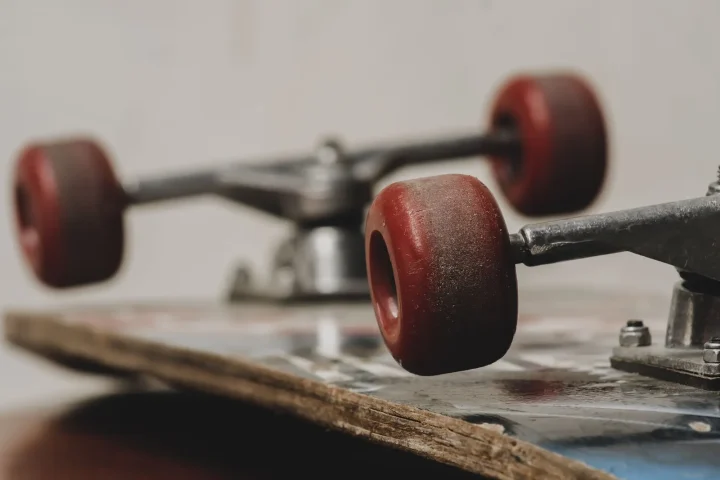
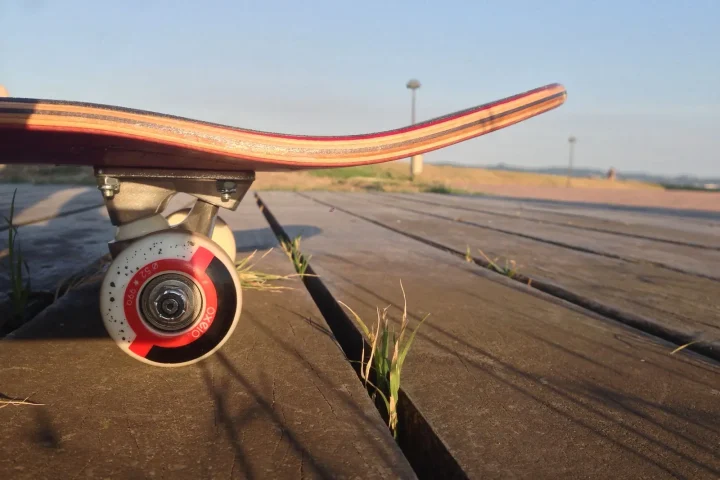
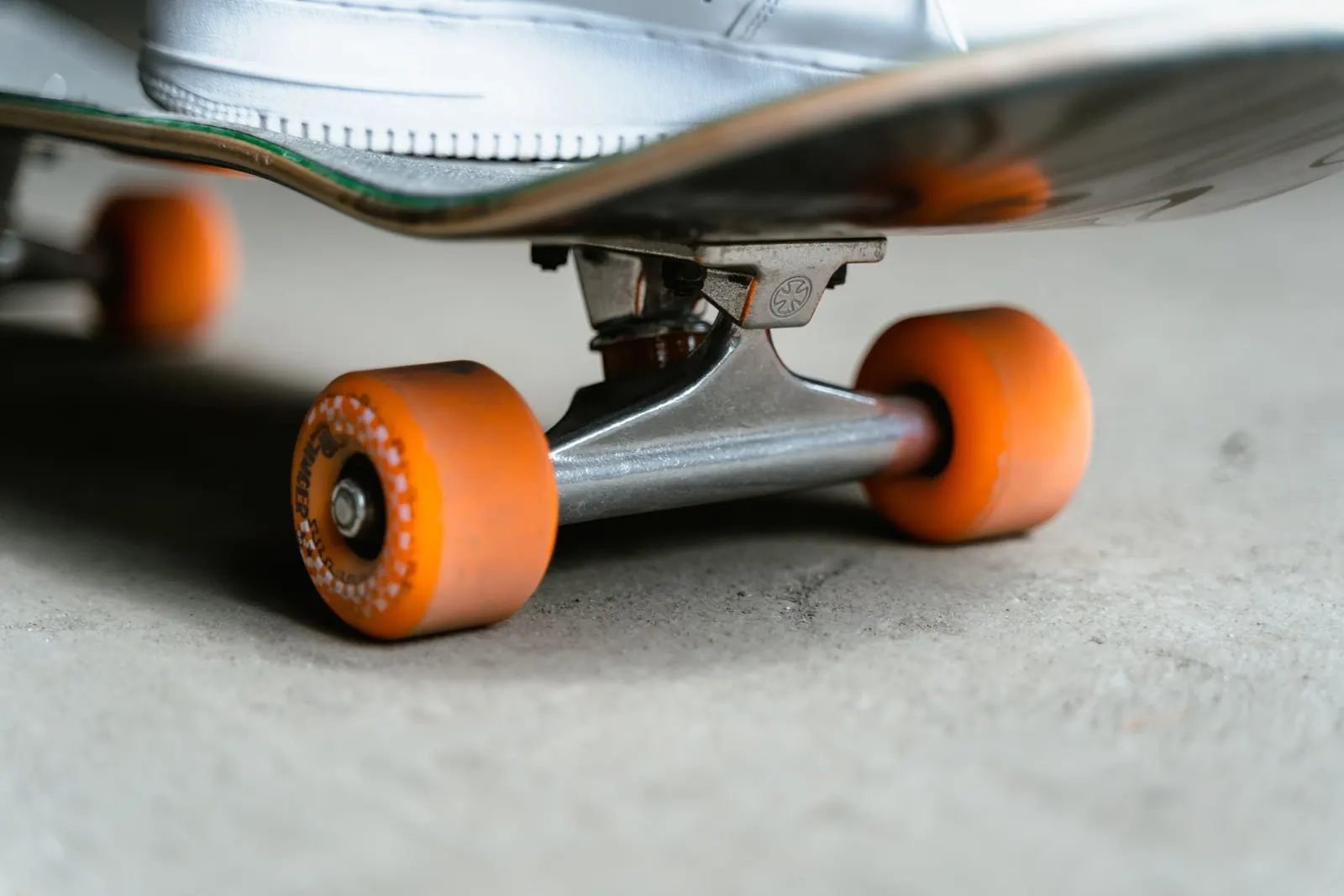
Longboard wheels are bigger and softer. That is what lets them roll over cracks, grit and rough pavement without a jolt. Skateboard wheels are smaller and harder, which suits smooth parks and the quick, precise feel needed for tricks. Our wheels guide explains size and hardness.
Trucks
Trucks are the axles. Longboards usually use reverse kingpin trucks, which are stable and give smooth, carving turns. Skateboards use traditional kingpin trucks, which turn sharply and suit tricks.
What each is good at
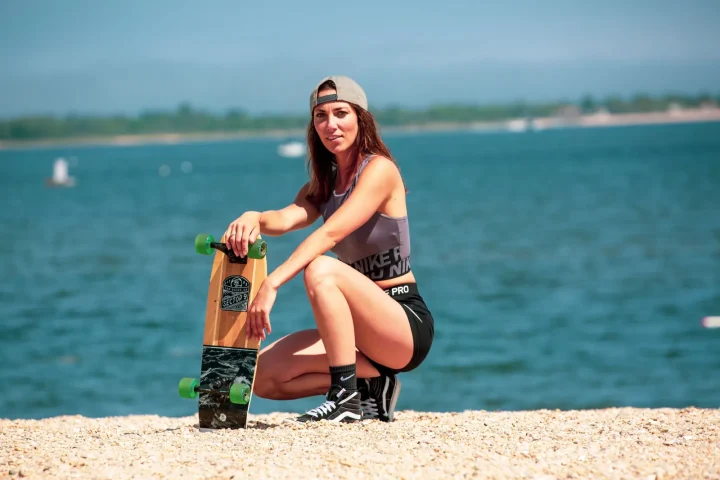
- Choose a longboard if you want to cruise, commute, carve or learn to ride on something forgiving.
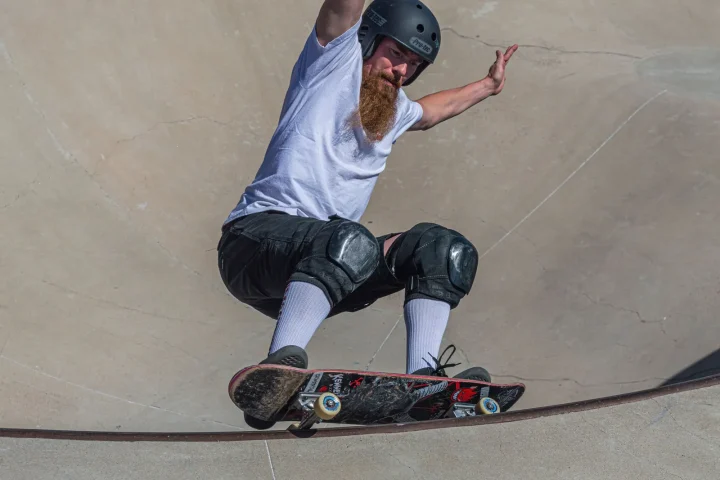
- Choose a skateboard if your goal is skatepark and street skating, flip tricks and grinds.
Can you do tricks on a longboard? Some, yes. Longer boards suit dancing, cross-stepping and flowing freestyle, and boards with a kicktail can handle basic tricks. Ollies and flip tricks are much easier on a smaller, lighter skateboard.
Which is easier to learn on?
For basic riding, a longboard is usually easier. The larger platform and softer wheels are more forgiving, so beginners tend to feel steady faster. A skateboard is not harder to ride, but it rewards a different set of skills and is less comfortable on rough ground.
How to decide
- Write down what you will actually do: get around, cruise on weekends, or hit a skatepark.
- If it is the first two, start with a longboard. Read how to choose a longboard.
- Whichever you choose, buy a helmet and pads. See what safety gear you need.
Common questions
Is a longboard good for beginners?
Yes. A stable, medium-length longboard with soft wheels is a forgiving first board for cruising and getting around.
Can I ride a longboard at a skatepark?
You can, though most longboards are not designed for it. Skateparks are built around the quick, responsive feel of a skateboard, and many parks have rules on what you can bring.
Is a cruiser the same as a longboard?
Not exactly. “Cruiser” usually means a shorter board with a kicktail and soft wheels, which sits between a skateboard and a longboard in size.