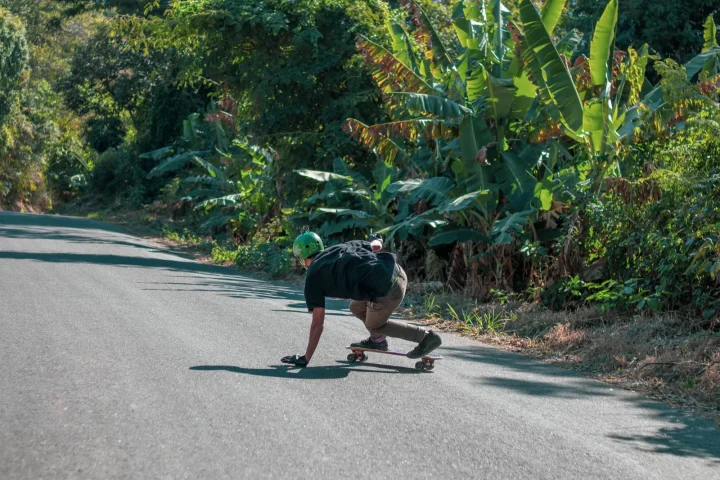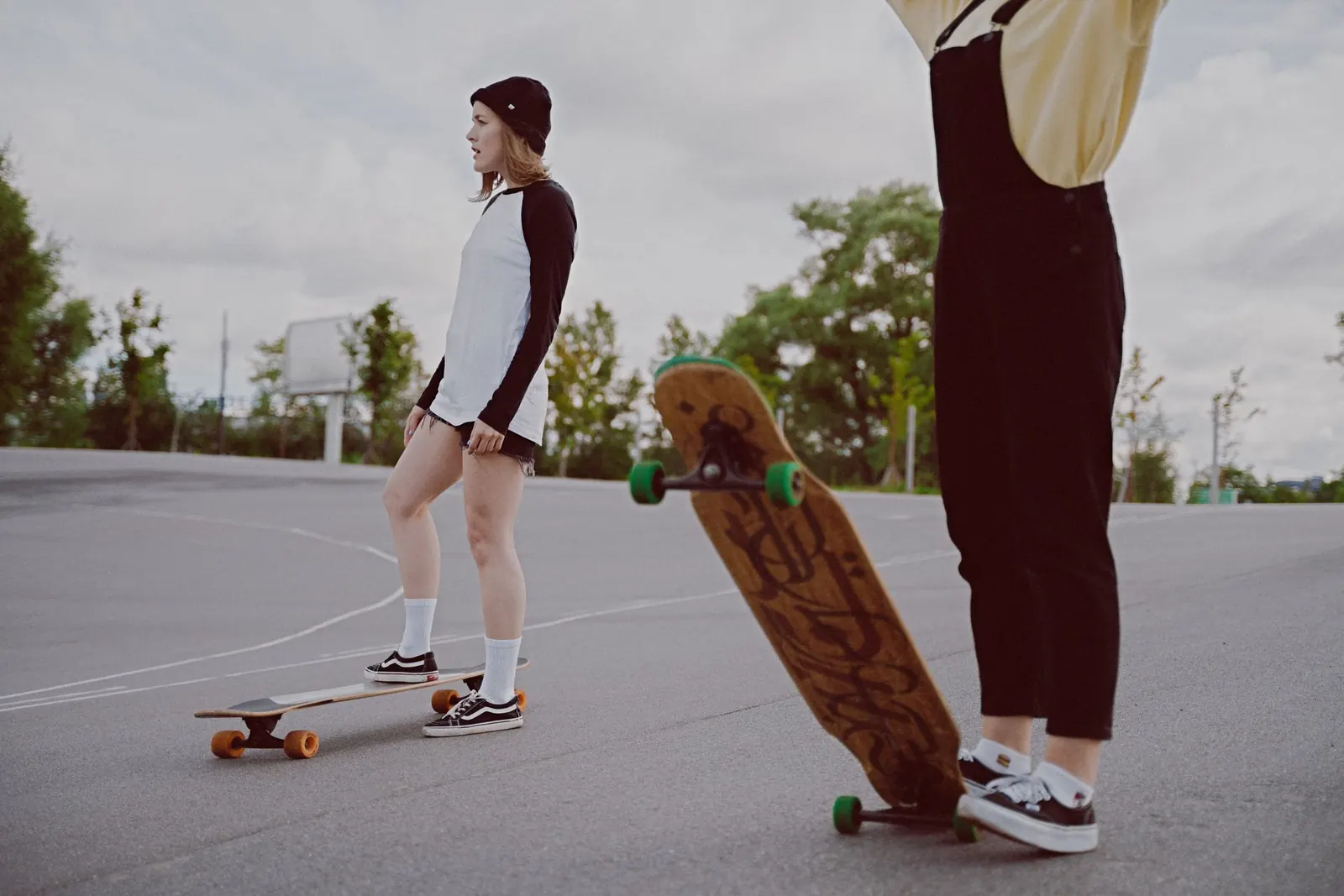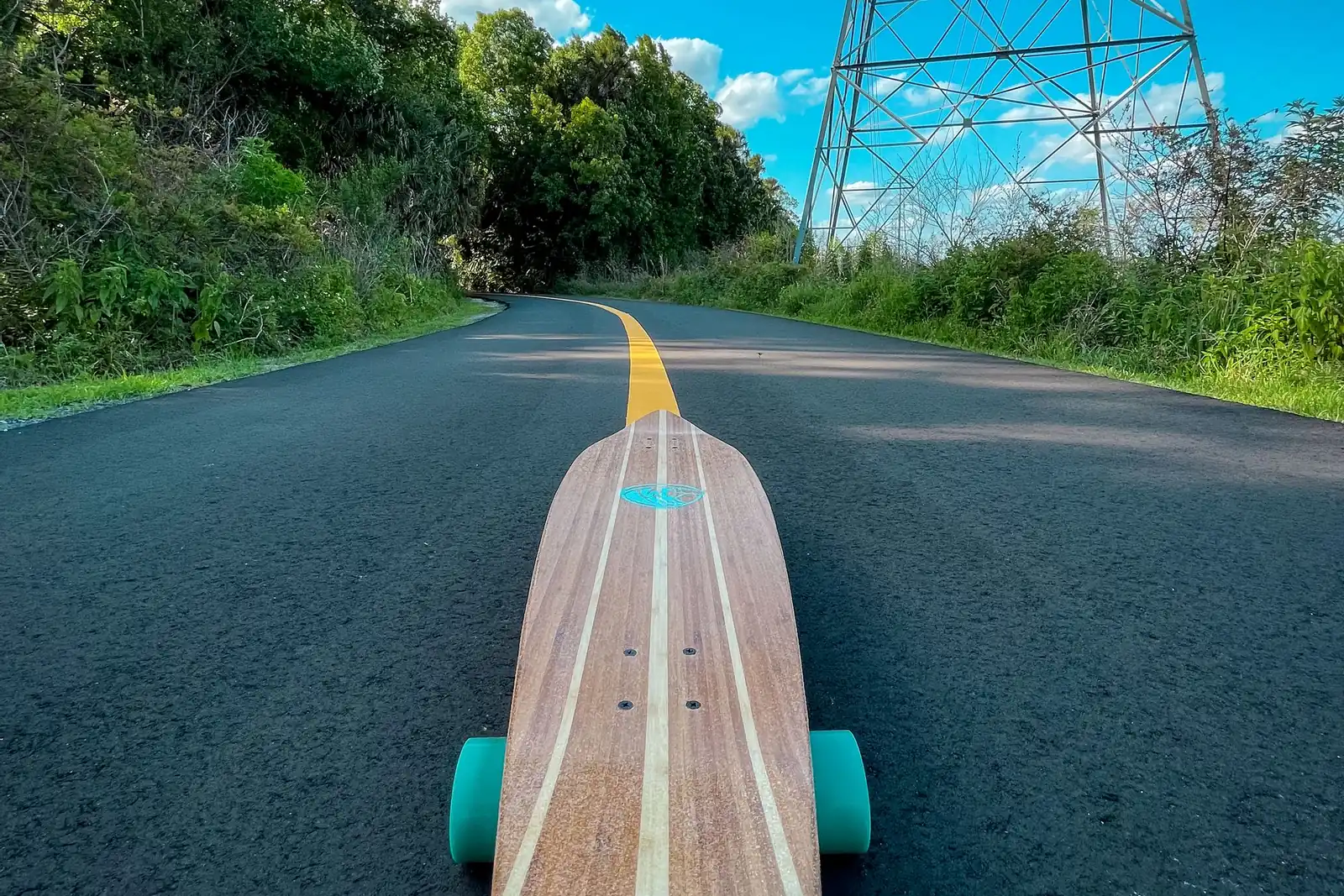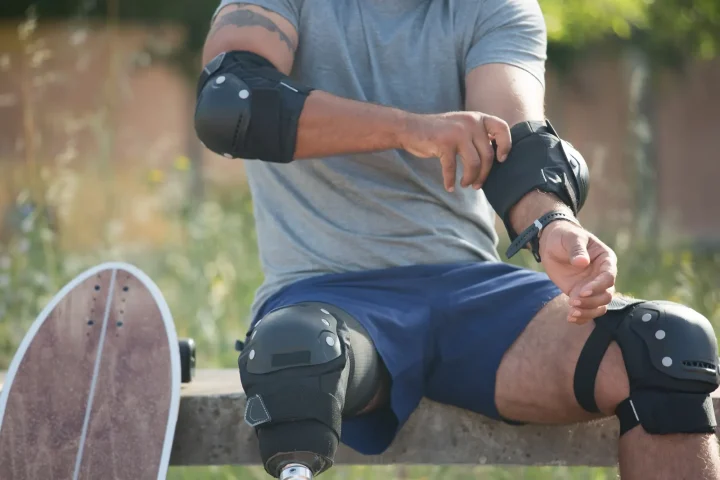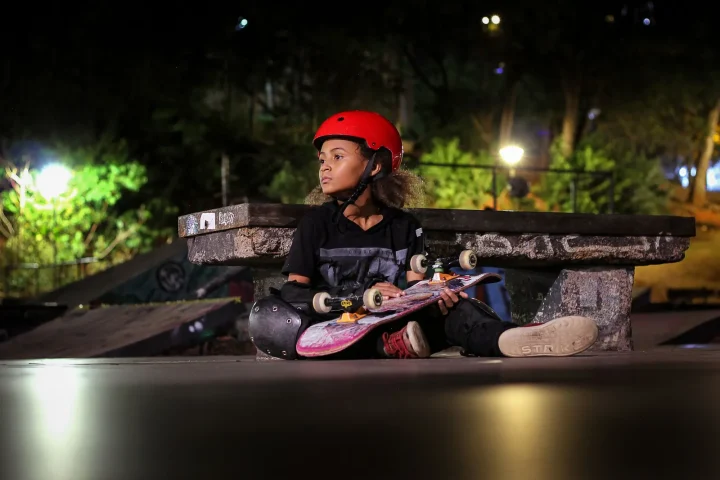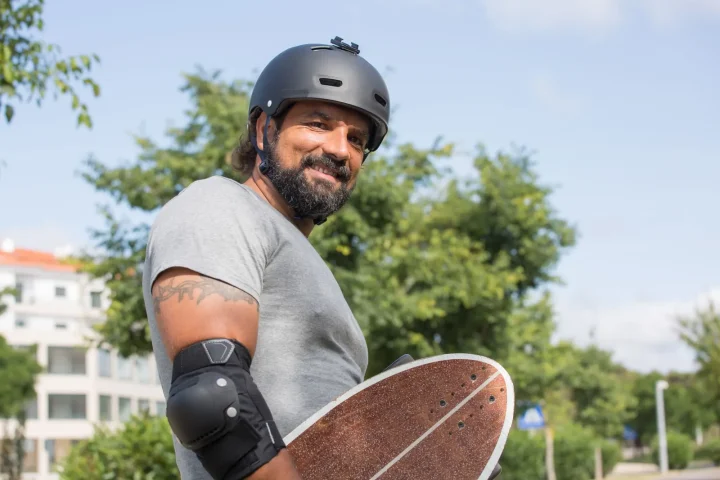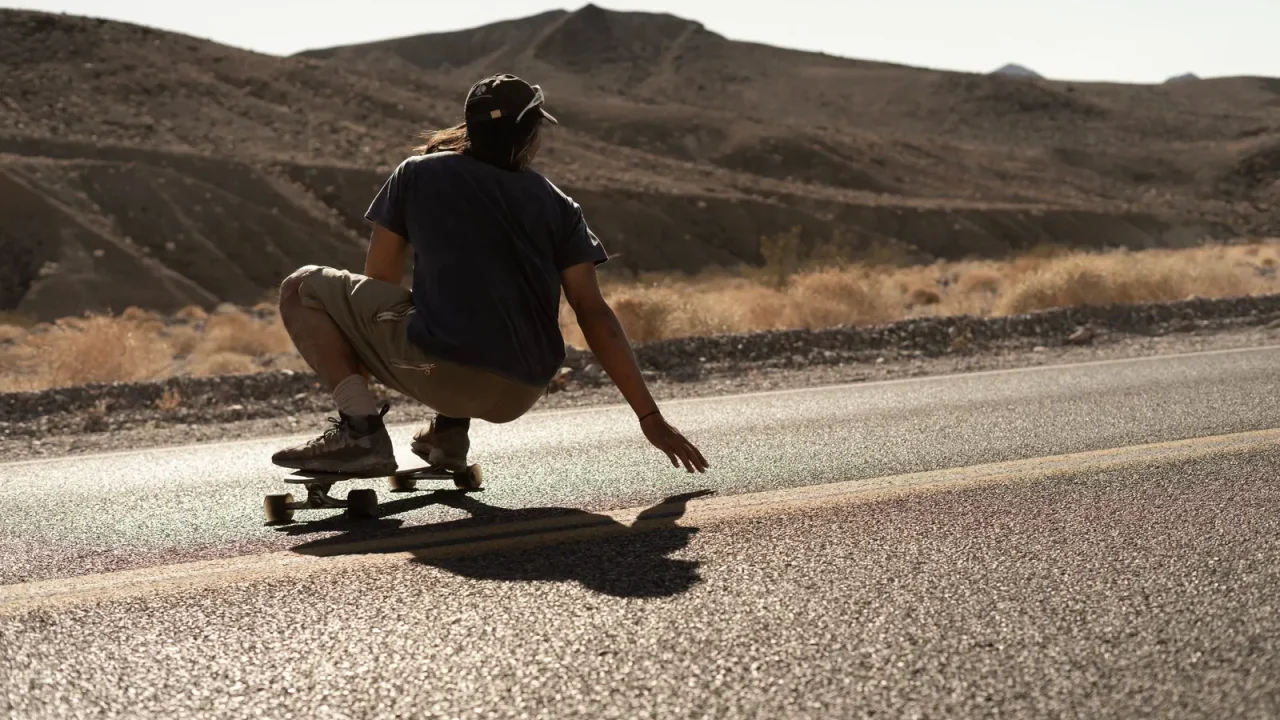
Freeride is the part of longboarding where riders come down hills sideways as often as forwards. It is about controlling speed with slides, drifting through corners and linking moves together, with style counting for as much as speed.
Here is the short answer. The best freeride longboards are symmetrical, fairly stiff and shaped with enough concave to hold your feet when the board goes sideways. Most are 38 to 42 inches long, and they are ridden on wheels made to slide.
This guide explains what freeride is and how it differs from downhill and freestyle. It covers the deck features that matter, how freeride boards are set up, and a sensible path for getting started. It also suggests three boards. Freeride is an advanced discipline, so the safety section comes first.
Quick answer
Symmetrical, stable and built to go sideways
A freeride board has to feel the same in both directions and keep your feet planted while the wheels slide.
- 🔄 Rides both ways
- 🧱 Stiff to medium deck
- 🦶 Concave to lock your feet
- 🧤 Gloves, helmet, pads
Read this first: freeride is not for beginners
Freeride happens on hills, at speed, with the wheels deliberately breaking grip. That combination is what makes it exciting, and what makes it risky. Do not start until the following are true.
- You ride confidently. Pushing, carving and foot braking should be automatic.
- You have the gear. A helmet, slide gloves with pucks, knee pads and elbow pads. Many riders add padded shorts and a full-face helmet.
- You have a suitable hill. Gentle, smooth, dry and free of traffic, with a clear view and a safe run-out.
- You are not alone. Ride with others who can watch for cars and help if something goes wrong.
🛡️ Start slower than you think you need to
Too much speed too soon is the classic freeride mistake. Learn each slide at low speed first. See our safety guides.
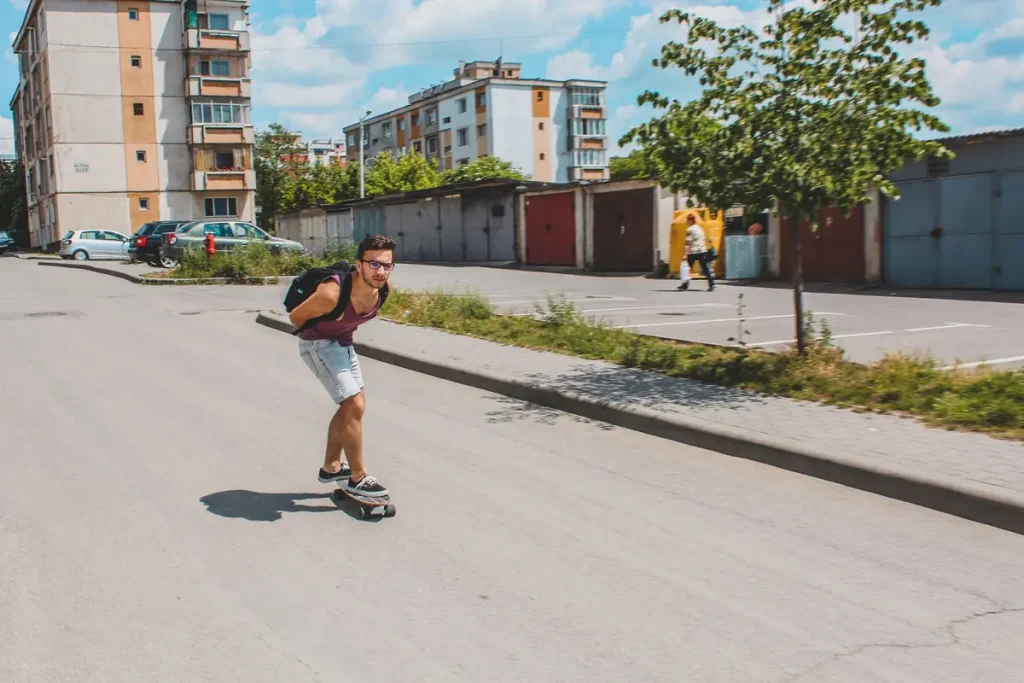
What is freeride longboarding?
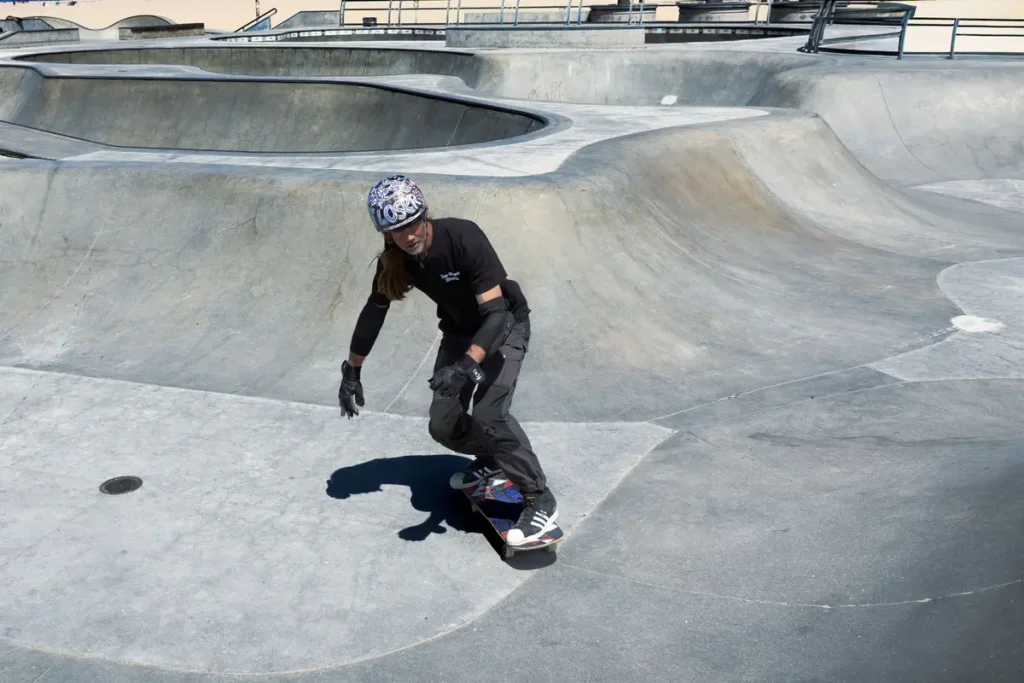
Freeride is riding hills with slides. A slide is when you turn the board across your direction of travel so the wheels skid instead of rolling. It scrubs speed quickly, and it can be done in many ways.
Where a downhill rider wants to get to the bottom as fast as possible, a freerider wants to enjoy the hill. They slide before corners, spin the board round, ride switch and link moves into a line. Speed is managed, not maximised.
| Discipline | The aim | Where | Typical board |
|---|---|---|---|
| Freeride | Slides and control, with style | Moderate hills | Symmetrical, 38–42 in, stiff to medium |
| Downhill | Speed and precise lines | Steep, fast hills | Stiff, often shorter, set up for grip |
| Freestyle | Tricks and footwork | Flat ground | Light, with kicktails |
The three overlap. Slides learned in freeride are how downhill riders slow down for corners. And some freeride moves, such as spins, come from freestyle. But the boards are tuned differently, and a good freeride board sits in the middle: more stable than a freestyle board, more willing to slide than a downhill one.
What makes a longboard good for freeride?
| Feature | Look for | Why it matters |
|---|---|---|
| Shape | Symmetrical | You will ride it in both directions |
| Flex | Stiff to medium | Predictable when sideways |
| Concave | Noticeable, with clear foot pockets | Holds your feet against sideways force |
| Mounting | Drop-through or top-mount | Low and forgiving, or high and precise |
| Length | 38–42 in | Stable, but still easy to rotate |
| Wheel clearance | Cutouts or wheel wells | No wheel bite in hard turns |
Freeride deck features, explained
Symmetry
A symmetrical deck, also called a twin, has the same shape at the nose and the tail. Freeriders spin the board through 180 degrees all the time. On a symmetrical deck, the board feels the same afterwards. That makes riding switch, with your other foot forward, much easier to learn.
Concave
Concave is the curve of the deck from one edge to the other. When the board slides, the road pushes it one way and your body keeps going the other. Your feet need something to brace against. A deck with good concave cups your feet and gives them an edge to push on.
Freeride decks often add more shaping. You may see these terms.
- W concave has a raised ridge down the middle of the deck, which sits under the arch of your foot.
- Flares are raised sections over the wheels that give your feet a reference point and add wheel clearance.
- Micro-drops are small steps near the trucks that your feet can lock against.
- Rocker is a slight dip along the length of the deck, which lets your feet settle in.
You do not need all of them. You do need a deck where your feet know where they are without you looking down.
Mounting
Freeride boards come in both main mounting styles, and riders argue happily about which is better.
| Factor | Drop-through | Top-mount |
|---|---|---|
| Ride height | Lower | Higher |
| Starting a slide | Easier | Takes more commitment |
| Grip | A little less | More |
| Control during a slide | Forgiving | More precise |
| Best for | Learning | Experienced riders |
If you are learning, a drop-through is the friendlier choice. It sits low, it feels stable, and it lets go of grip without much effort. As your skills grow, you may come to prefer the sharper feel of a top-mount.
Flex and length
A stiff or medium-stiff deck stays predictable under the sudden sideways loads of a slide. A very flexible deck can bounce and upset the board at the worst moment.
Most freeride decks are 38 to 42 inches long. That is long enough to feel stable on a hill and short enough to swing round easily.
How a freeride board is set up
The deck is only part of it. Wheels and trucks are tuned for freeride as well.
Wheels
Freeride wheels are made to slide. They have rounded edges instead of sharp ones, so they let go smoothly. They are usually a little harder than cruising wheels, in the range of about 80A to 86A, and around 65 to 70 mm across. Many come with a pre-roughened surface so they slide properly from the first run.
The soft, square-edged wheels fitted to most budget completes grip hard and release suddenly. They are fine for learning to carve. For real freeride, a set of proper slide wheels is the most important upgrade.
Trucks and bushings
Reverse kingpin trucks are standard. Many freeriders choose a baseplate angle between 44 and 50 degrees. A lower angle is calmer at speed. A higher one is livelier.
Bushings, the rubbery rings inside the trucks, are usually a little firmer than for carving. You want the board to stay settled when you set up for a slide, and to respond when you ask it to.
Bearings and hardware
Slides put heavy sideways loads on bearings. Spacers between the bearings in each wheel keep them aligned and help them survive. Check every bolt and nut before a session. Freeride shakes hardware loose faster than any other kind of riding.
Our picks: 3 freeride longboards
These three are all drop-throughs, which is the easiest layout to learn freeride on. One is a budget board, one is a wide mid-priced deck, and one is premium. The listings do not all state whether the shape is fully symmetrical, so look at the photos before you buy.
🔎 How we chose these
We picked these boards by the specifications listed on Amazon and by how well they fit the job. We have not ride-tested them, and we do not show prices or star ratings because they change often. Specs were checked in October 2026, so confirm the details on the product page before you buy. LongboardHub earns from qualifying purchases as an Amazon Associate, at no extra cost to you. Read our affiliate disclosure.
💰 Best budget freeride board
Shape illustration, not a product photo
Volador Urban Freeride Pro Longboard (42 in)
Best for: Riders who want an affordable board to start learning on.
A 42-inch drop-through with adjustable-angle trucks. The listing says its 78A centre-cored wheels give a predictable move from grip to slide for riders who are learning freeride.
- Length 42 in
- Width 9 in
- Deck 8-ply maple with epoxy resin, camber concave, drop-through
- Trucks 7 in forged aluminum, 45° to 55° adjustable
- Wheels 70 x 51 mm, 78A, centre-cored
- Bearings ABEC-9
- Listed weight limit 220 lb
✅ Why it works
- Adjustable 45 to 55 degree trucks let you trade turning for stability.
- The drop-through deck is low and steady.
- OS780 grip tape is listed for slide control.
⚠️ Keep in mind
- The listed weight limit is 220 lb.
- Soft 78A wheels grip more than they slide, so sliding takes commitment.
- The 9-inch deck is narrow for very big feet.
Buy from Amazon Price and stock are shown on Amazon. Specs are from the Amazon listing, checked October 2026.
📏 Best wide freeride deck
Shape illustration, not a product photo
Santa Cruz Lion God Rasta Drop-Thru Cruzer (40 in)
Best for: Riders who want a 10 inch wide platform from an established skate brand.
A 40-inch drop-through from Santa Cruz with a wide 10-inch deck. It comes pre-assembled with Santa Cruz trucks and wheels.
- Length 40 in
- Width 10 in
- Deck 7-ply maple, drop-through
- Trucks Santa Cruz
- Wheels 72 mm
- Listed weight limit 220 lb
✅ Why it works
- The drop-through deck is low and steady.
- A 10-inch-wide deck gives bigger feet room.
- Large 72 mm wheels roll well over rough patches.
⚠️ Keep in mind
- The listing gives the wheel hardness only as a range.
- The listed weight limit is 220 lb.
- Stock was low when we checked, so availability may vary.
Buy from Amazon Price and stock are shown on Amazon. Specs are from the Amazon listing, checked October 2026.
💎 Best premium freeride board
Shape illustration, not a product photo
Loaded Dervish Sama (about 41 in)
Best for: Experienced riders who want a composite deck in the right flex.
Loaded describes the Dervish Sama as a drop-through carving board that also handles pumping, freestyle, freeride and commuting. Nose and tail kicks add trick options that most drop-throughs lack.
- Length 104 cm (about 41 in)
- Width 9 in
- Deck Bamboo and fiberglass, drop-through, nose and tail kicks
- Trucks Paris 180 mm, 50°
- Wheels Orangatang 75 mm, 80a
- Bearings Loaded Jehu V2
- Flex Two options by rider weight
✅ Why it works
- Drop-through mounting gives stability and easier pushing.
- Large cutouts allow deep carves without wheel bite.
- Nose and tail kicks open up freestyle moves.
- Paris trucks and Orangatang wheels are fitted.
⚠️ Keep in mind
- It costs several times more than a budget complete.
- Pick the flex that matches your weight, as the listing explains.
- Stock was low when we checked, so availability may vary.
Buy from Amazon Price and stock are shown on Amazon. Specs are from the Amazon listing, checked October 2026.
| Product | Length | Width | Deck | Amazon |
|---|---|---|---|---|
| Volador Freeride 42 | 42 in | 9 in | 8-ply maple, camber concave | View on Amazon |
| Santa Cruz Lion God 40 | 40 in | 10 in | 7-ply maple, drop-through | View on Amazon |
| Loaded Dervish Sama | About 41 in | 9 in | Bamboo and fiberglass | View on Amazon |
📌 Plan for wheels
Whichever board you choose, check the wheels. If they are soft and square-edged, budget for a set of round-lipped freeride wheels once you are committed.
A sensible path into freeride
Freeride is learned in stages. Each stage should feel easy before you move on.
- Ride well firstSpend real time cruising and carving. You should be completely at home on the board.
- Learn to carve hardOn a gentle hill, link deep turns to control your speed. Feel where the wheels begin to slip.
- Learn to ride switchPractise riding with your other foot forward on flat ground. It makes everything after a spin easier.
- Learn a hand-down slideWith gloves and pads on, learn the basic crouching slide at low speed. This is your emergency brake.
- Learn it on both sidesSlides toward your heels and toward your toes feel very different. Learn both.
- Move on to stand-up slidesOnce hand-down slides are reliable, start working on slides without a hand on the road.
- Add speed graduallyOnly move to a steeper hill when the current one feels easy.
Expect this to take months, not days. That is normal. Riding with a local group speeds it up enormously, because someone can show you in thirty seconds what is hard to learn from a page.
Choosing where to ride
- Start gentle. A hill you could comfortably roll down without braking.
- Check the surface. Smooth, clean, dry tarmac. Walk it first and look for gravel, cracks and covers.
- Avoid traffic. Choose roads with little or no traffic and no blind junctions. Use spotters.
- Look at the run-out. The bottom should flatten out and give you room to stop.
- Respect the place. Be considerate of residents and other road users, and follow local rules.
Real-life examples: which board would they choose?
The riders below are made-up examples, based on the kind of questions people often ask in longboarding groups and forums. They are not real people or reviews. See which one sounds most like you.
The newcomer to freeride
Leah, 5′7″, 145 lb
Leah carves confidently and wants to learn her first slides.
Good choice: a symmetrical drop-through of about 40 inches, with gloves, pads and a helmet bought before the board.
The rider with big feet
Dario, 6′0″, 190 lb
Dario finds 9 inch decks cramped when he sets up for a slide.
Good choice: a 10 inch wide symmetrical deck, which gives his feet a proper platform.
The improver
Sana, 5′5″, 130 lb
Sana can already do hand-down slides on both sides and wants a better board.
Good choice: a quality symmetrical deck in a flex matched to her weight, with a dedicated set of slide wheels.
Common mistakes (and how to fix them)
❌ Buying a directional board
After a 180 degree slide you are riding it backwards.
✅ The fix: Choose a symmetrical deck.
❌ Keeping grippy cruising wheels
They hold on and then let go suddenly.
✅ The fix: Fit round-lipped wheels of about 80A to 86A.
❌ Skipping the gloves
Hands meet the road in almost every early slide.
✅ The fix: Buy slide gloves before your first attempt.
❌ Choosing a hill that is too steep
Speed builds faster than skill.
✅ The fix: Learn on the gentlest hill you can find.
❌ Riding alone
Nobody is watching for traffic, and nobody can help if you fall.
✅ The fix: Ride with others.
Looking after your board
A longboard needs very little maintenance, but a few habits make it last much longer and ride much better.
- Keep it dry. Water rusts bearings and damages wooden decks. If the board gets wet, dry it and spin the wheels.
- Check the bolts. Vibration loosens truck bolts and axle nuts over time. A quick check every few weeks is enough.
- Clean the bearings when the wheels sound gritty or stop spinning freely.
- Swap the wheels around now and then, so they wear evenly.
- Replace worn bushings. Cracked or squashed bushings make a board feel sloppy, and new ones cost very little.
- Store it indoors. Heat, cold and damp all shorten the life of a deck.
For step-by-step help, see our maintenance guides.
Key terms in plain English
Longboard listings use a lot of jargon. Here are the terms used in this guide, explained simply.
| Term | What it means |
|---|---|
| Sliding | Turning the board sideways so the wheels skid, to slow down or stop. An advanced skill that needs gloves and pads. |
| Switch | Riding with your other foot forward. |
| Concave | The curve of the deck from edge to edge. It helps your feet feel where they are. |
| Rocker | A slight downward dip along the deck. Your feet settle into it, which feels secure. |
| Drop-through | A deck with holes that the trucks mount through, so the deck sits lower. |
| Top-mount | A deck that sits on top of the trucks. It rides higher and turns more sharply. |
| Wheel lip | The edge of a wheel. A square lip grips harder. A round lip lets go more easily, which suits sliding. |
| Durometer | Wheel hardness, shown as a number and the letter A. Around 78A is soft and grippy. The mid 80s and above are firmer. |
| Baseplate angle | The angle of the part of the truck that bolts to the deck. About 50 degrees turns easily. About 40 to 45 degrees is calmer at speed. |
| Bushings | The rubbery rings inside each truck. Softer ones let the board lean easily. Harder ones resist. |
| Bearing spacers | Small metal tubes that sit between the two bearings in a wheel and keep them aligned. |
| Wheel bite | When a wheel touches the deck in a hard turn and stops suddenly. Cutouts, wheel wells and risers prevent it. |
Frequently asked questions
What is the best freeride longboard?
The best freeride longboards are symmetrical, stiff to medium in flex and about 38 to 42 inches long, with enough concave to hold your feet during a slide. A drop-through is the easiest to learn on.
What is freeride longboarding?
Freeride is riding hills using slides to control speed, with an emphasis on style and flow. Riders turn the board sideways so the wheels skid, spin the board round and link moves together.
What is the difference between freeride and downhill?
Downhill is about speed and precise lines on steep hills. Freeride is about slides and control on more moderate hills. Downhill boards are set up for grip. Freeride boards are set up to slide.
Is a drop-through or top-mount better for freeride?
A drop-through is lower, more stable and easier to break into a slide, which suits learners. A top-mount offers more grip and precision, which many experienced riders prefer.
Can a beginner start with freeride?
No. Freeride needs solid riding skills first. Learn to push, carve and foot brake confidently, then learn slides at low speed with full protective gear and experienced company.
Your freeride checklist
The first four are about you, not the board. They come first for a reason.
- I ride, carve and foot brake confidently.
- I have a helmet, slide gloves, knee pads and elbow pads.
- I have a gentle, smooth, traffic-free hill.
- I have people to ride with.
- My board is symmetrical.
- My deck is stiff to medium, with good concave.
- I have, or will get, proper slide wheels.
- I check my hardware before every session.
The best freeride longboards are simple at heart: symmetrical, stable and shaped to hold you. But freeride itself is a skill, built slowly. Get the gear, find a gentle hill, ride with others, and let the speed come later.
Still deciding?
Still building the basics? Find a stable board to learn on with our free tools.
Try the free Size Guide Take the Match Quiz Back to our picks
Product specs and availability were checked in October 2026 and can change. Always confirm the details on the product page before you buy.