In this guide
Riding a longboard is a handful of simple skills that build on each other: balancing, pushing, turning and stopping. Learn them in that order, in a safe place, and the board stops feeling unstable quickly.
Before you ride
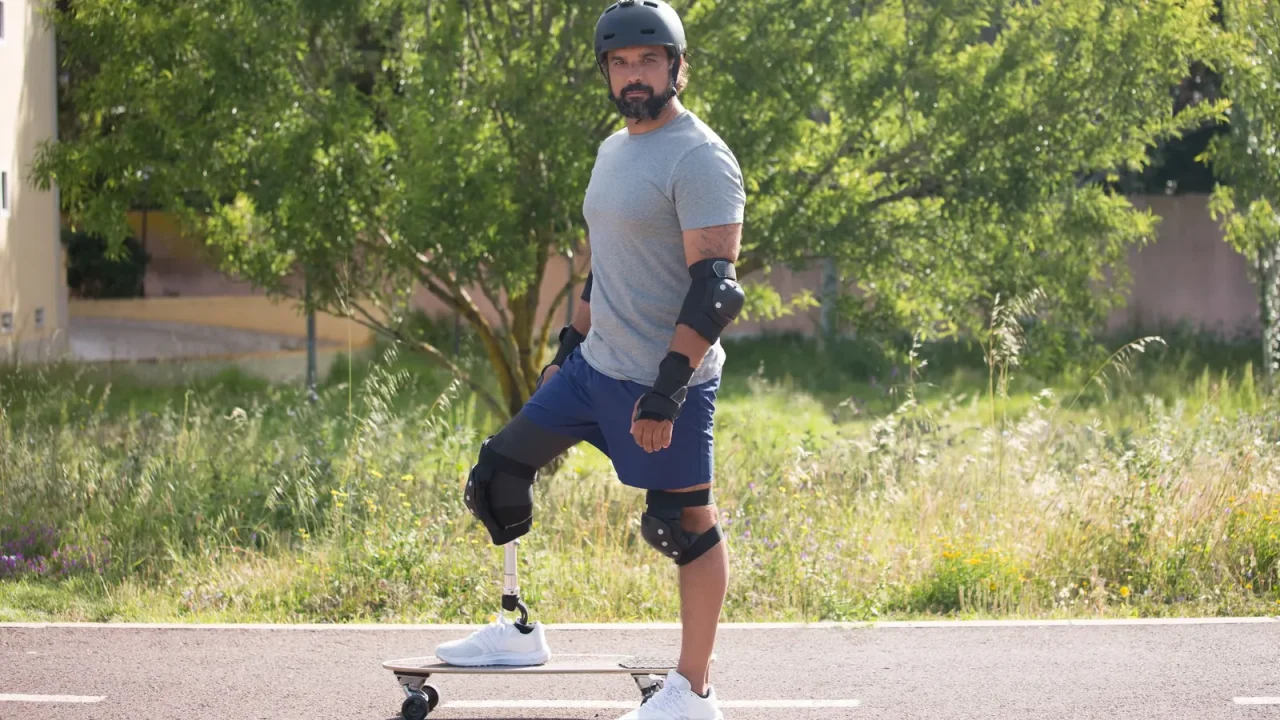
- Wear protective gear. At minimum a helmet and wrist guards, ideally knee and elbow pads too. See what safety gear you need.
- Pick the right place. A smooth, flat, quiet surface with no traffic: an empty car park, a smooth path or a quiet cul-de-sac. Avoid hills and rough ground at first.
- Check the board. Wheels should spin freely and the trucks should not wobble loose.
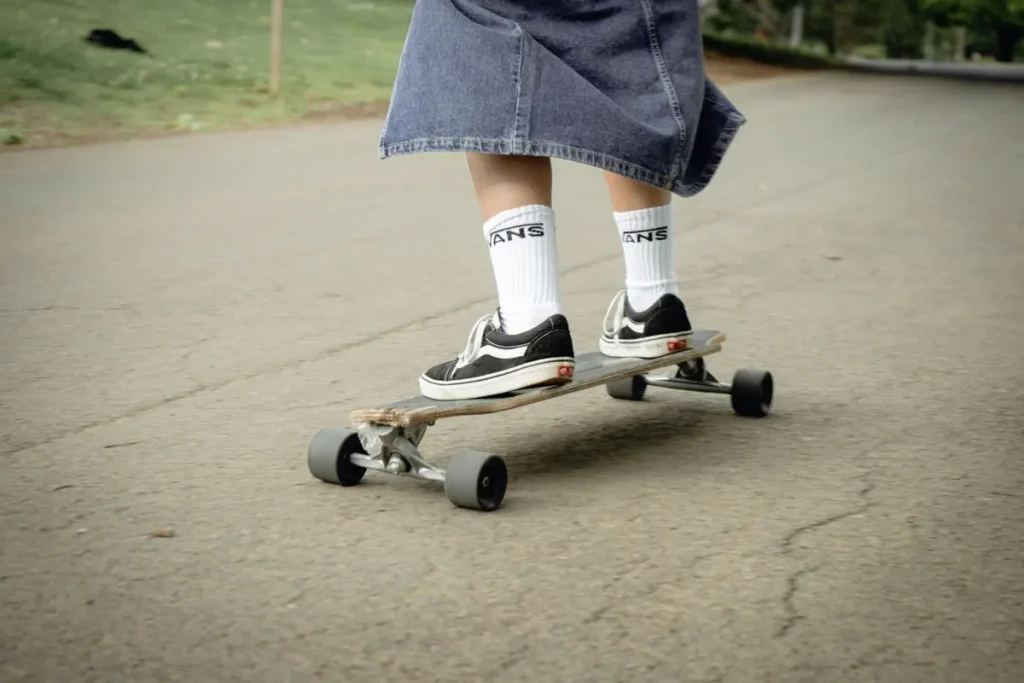
- Wear flat-soled, closed shoes. They give you grip and let you foot brake later.
Find your stance
Most people have a natural stance: left foot forward (regular) or right foot forward (goofy). Neither is better. To find yours, think about which foot you instinctively step forward with when you slide on a slippery floor, or which foot you would put forward to walk onto a moving escalator. That is likely your front foot. If in doubt, try both on the grass with the board still and see which feels steadier.
Get on and balance
- Put the board on grass or carpet, or hold onto a fence, so it cannot roll away.
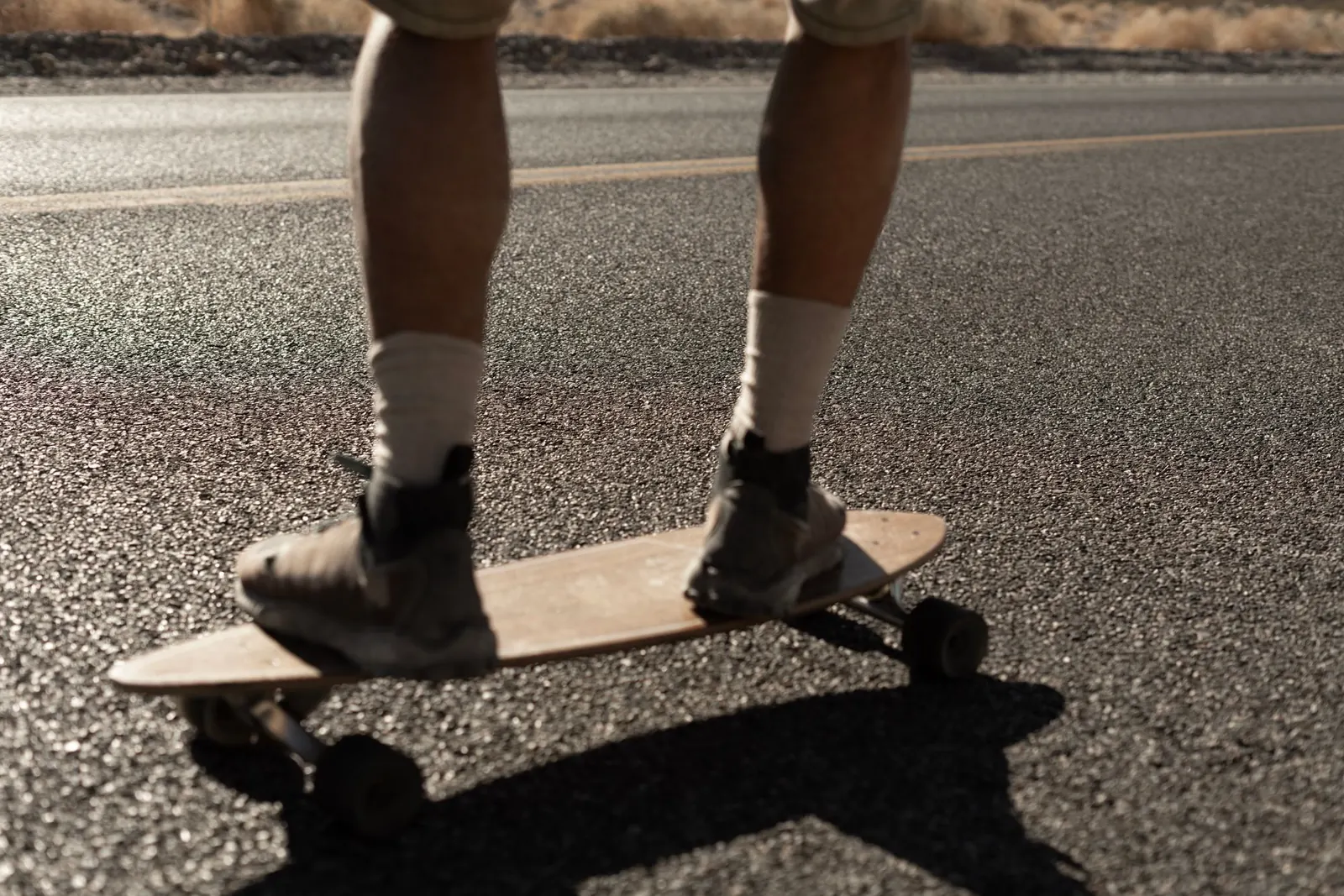
- Place your front foot just behind the front bolts, angled a little forward.
- Bring your back foot onto the deck, near the tail, roughly across the board.
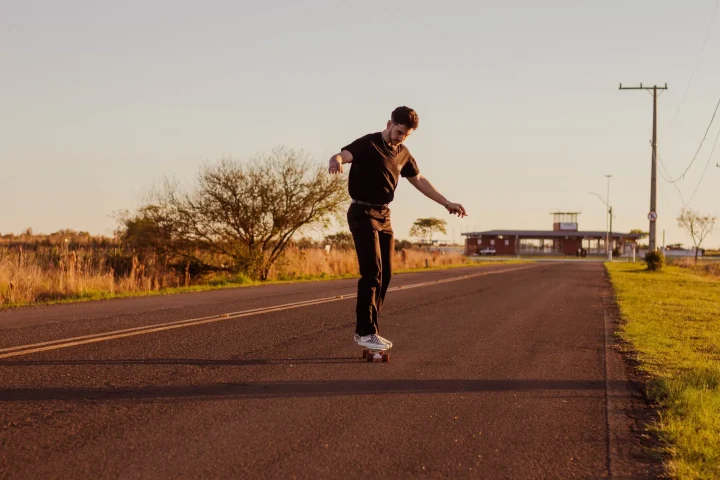
- Bend your knees, keep your shoulders level and hold your arms out for balance.
- Rock gently from heel to toe to feel how the board responds.
Push off
- With your front foot on the board and angled forward, take a small push with your back foot.
- Keep your weight over the board, not leaning back.
- After one or two pushes, bring your back foot onto the deck, near the tail.
- Look ahead, not at your feet.
Start with single pushes and coast. Add more pushes as you get comfortable.
Turn
Longboards turn by leaning. Press gently toward your toes to turn one way and toward your heels to turn the other. Keep your knees bent and make the movement smooth. Loosely set trucks turn more easily, tighter trucks are steadier. See how tight should longboard trucks be.
Stop
Stopping is the most important skill, so practise it early and often. The simplest method is foot braking: slide your back foot lightly along the ground while keeping most of your weight on the front foot. Full instructions, plus other methods, are in how to stop on a longboard.
A simple three-session practice plan
- Session 1: stance, standing and balancing on grass, then rolling a few feet and stepping off.
- Session 2: pushing and coasting in a straight line on flat pavement, with gentle turns.
- Session 3: practise foot braking at walking speed, then link pushing, turning and stopping.
Do not move on to hills until you can stop reliably on flat ground.
Common beginner mistakes
- Standing too upright. Bend your knees to absorb bumps and stay balanced.
- Looking down. Look where you want to go.
- Leaning back. Keep your weight centred or slightly forward.
- Going too fast too soon. Speed comes after control.
- Riding without gear. Falls are part of learning.
Beginner questions
Is longboarding hard to learn?
Basic riding is approachable for most people. Balance and pushing usually come together within a few sessions on flat ground. Stopping confidently and handling hills take longer, which is why it is worth practising them in a safe place.
How long does it take to learn?
It varies a lot between people. Many riders feel comfortable cruising on flat ground after several practice sessions. Treat that as a rough guide, not a target.
What board is best for learning?
A stable board with soft wheels is more forgiving. See how to choose a longboard and best longboards for beginners.