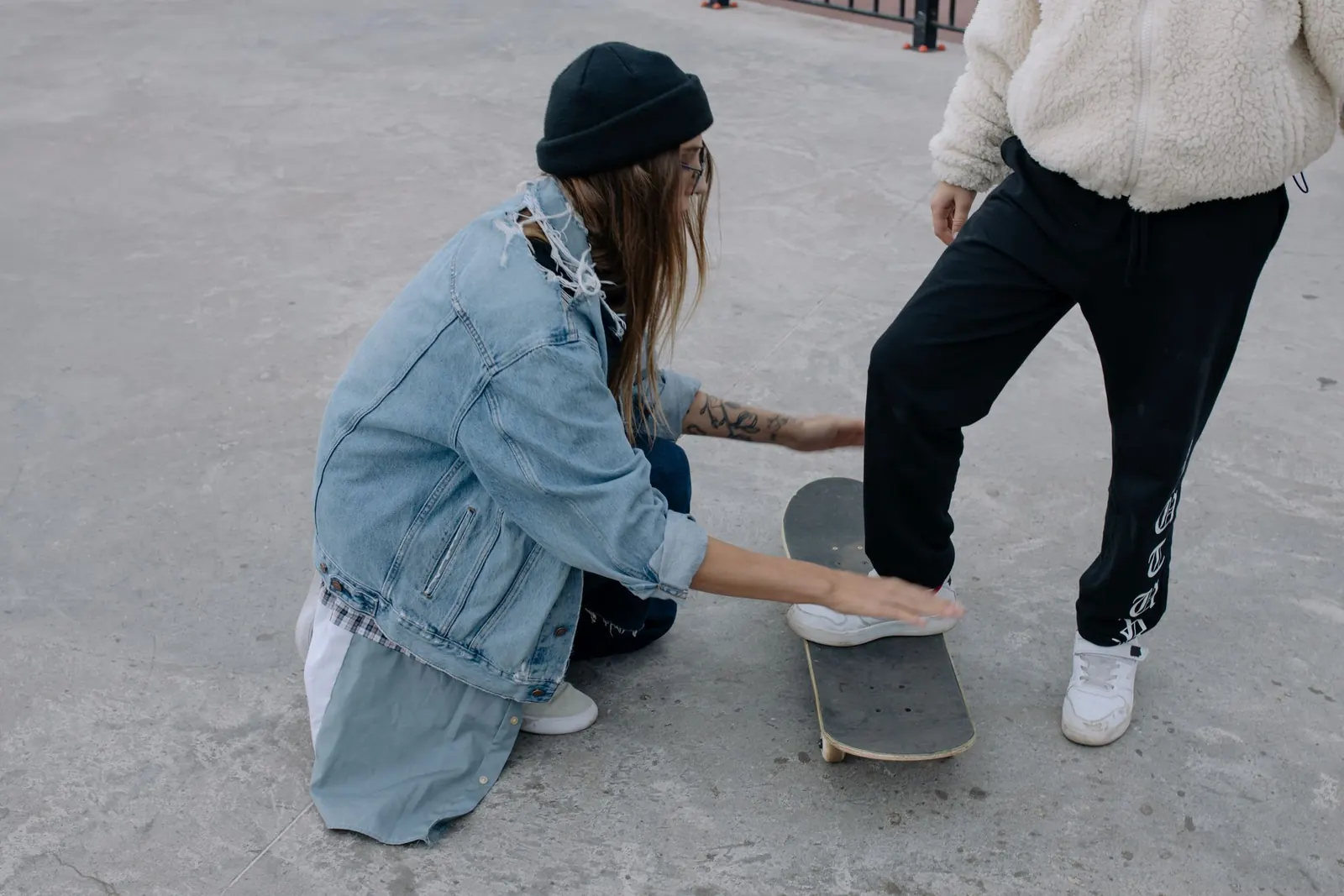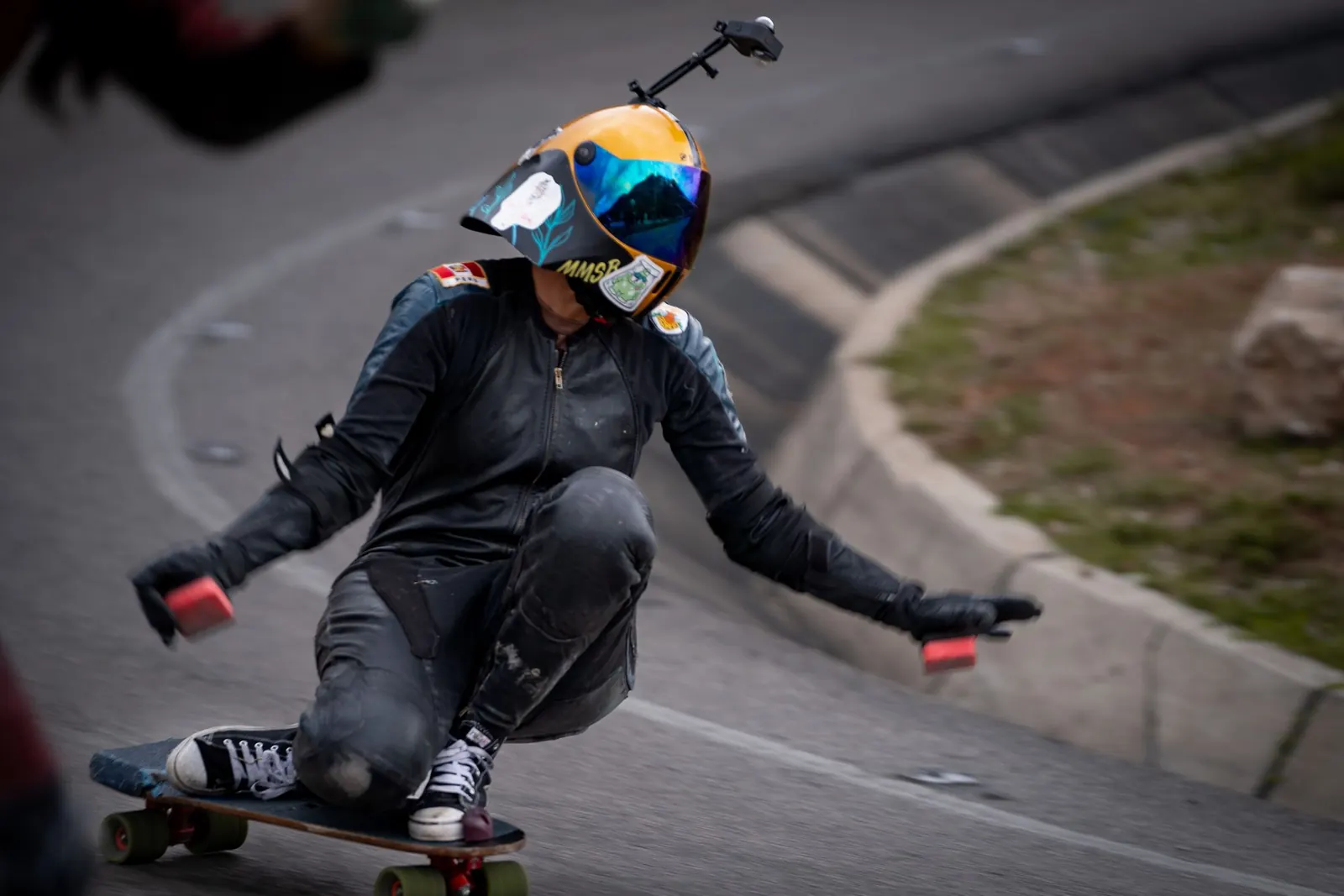
Downhill is the fastest and riskiest kind of longboarding. It is also the one where the board matters most. A cruiser that feels lovely at walking pace can turn frightening at 25 mph.
Here is the short answer. The best downhill longboards are stiff, sit low, and use trucks set up for stability instead of sharp turning. Flex, height and twitchy trucks are the three things that cause trouble at speed.
This guide explains each of those in plain English. It also covers the safety gear and skills you need first, because no board makes downhill safe on its own. If you are a beginner, please read the safety section before the picks.
Quick answer
Stiff, low and stable
A downhill board should feel calm and a little boring at low speed. That calm is exactly what you want when the speed builds.
- 🧱 No flex
- ⬇️ Low platform
- 📐 Trucks: 40–45°
- ⛑️ Full-face helmet
Read this first: downhill is an advanced discipline
This is not a formality. A fall at speed is a different thing from a fall at walking pace. Before you ride any hill with intent, you need three things in place.
- You can stop. That means a reliable foot brake at moderate speed, and ideally a controlled slide. If you cannot shed speed, you are a passenger.
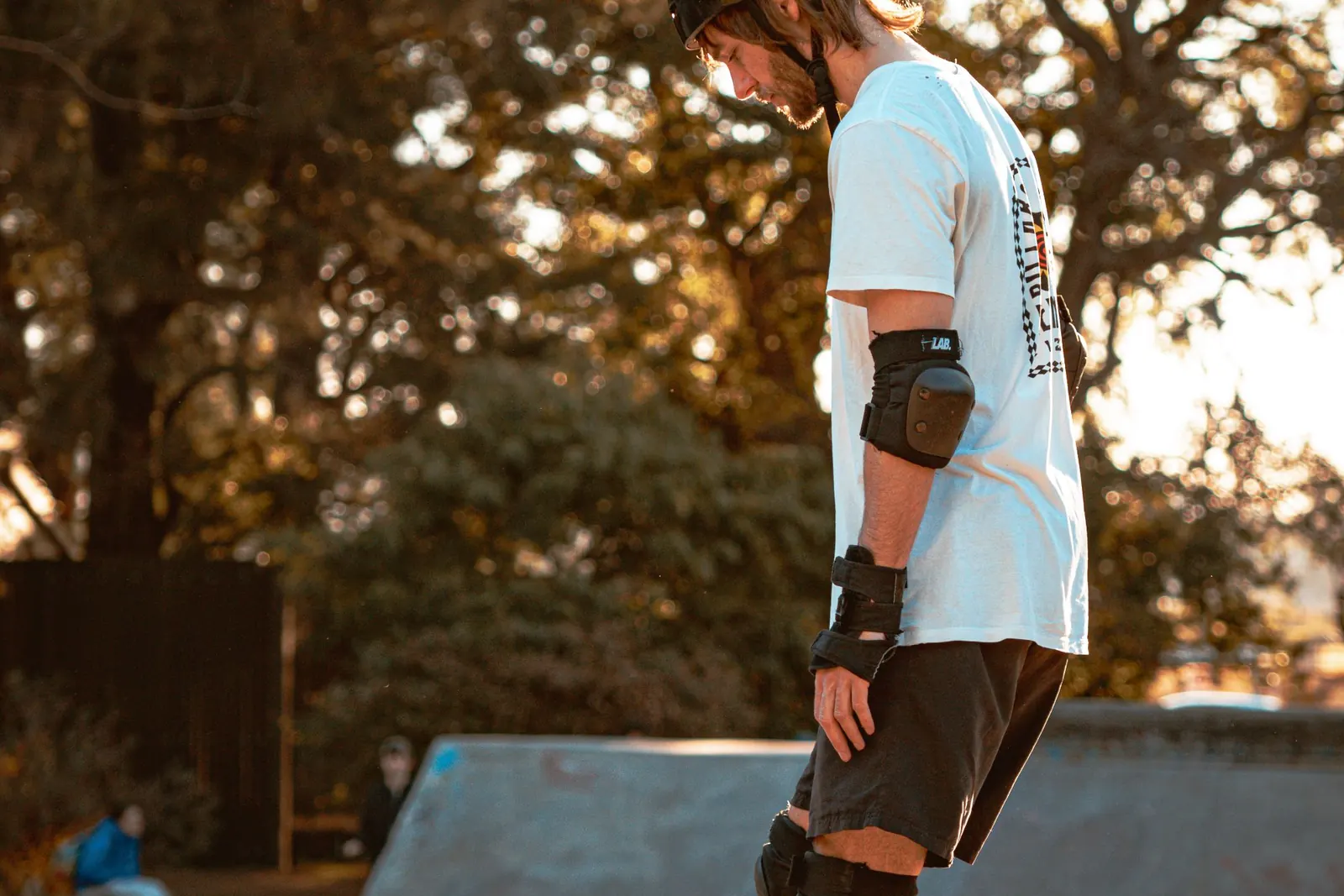
- You have the right gear. A certified full-face helmet, slide gloves with pucks, and knee and elbow pads are the usual minimum. Many riders add padded shorts and leathers.
- You have a safe place. A road with no cross traffic, good sight lines and a safe run-out at the bottom. Ride with others who can spot for cars.
🛡️ If you are new to longboarding
Do not start with downhill. Spend your first months on flat ground and gentle slopes, learning to push, carve and foot brake. Then learn to slide at low speed with experienced riders. See our safety guides.
The boards below are tools for riders building toward speed. None of them replaces skill, and none of them is a reason to skip the steps above.
What makes a longboard good for downhill?
At speed, small inputs have big effects. A good downhill board is designed to filter out the small stuff and stay predictable.
| Feature | Look for | Why it matters |
|---|---|---|
| Flex | None. A stiff deck | Flex bounces at speed and feeds wobbles |
| Ride height | Low, or a deck that locks your feet in | A lower centre of gravity is steadier |
| Trucks | Reverse kingpin, 40 to 45 degree baseplates | Lower angles turn less for the same lean |
| Bushings | Firmer than cruising bushings | They resist sudden, unwanted lean |
| Wheels | 70 mm or more, with square edges | Square-edged wheels grip harder in corners |
| Concave | Enough to feel where your feet are | You cannot look down at speed |
Compare that with a cruising board, which wants the opposite of almost every row: some flex, easy turning, soft bushings. That is why one board rarely does both jobs well.
Speed wobbles: the problem downhill boards are built to solve
Speed wobbles are the reason all of this matters. A wobble starts as a small side-to-side twitch. The board swings one way, you correct, it swings back further, and within a second or two the swings are too big to control.
Wobbles come from the back of the board. When the rear truck turns too easily, it starts steering on its own. Several things make that more likely.
- A flexible deck, which bounces and unsettles the trucks.
- High-angle trucks with soft bushings, which turn at the slightest lean.
- Standing too far back, which unloads the front truck.
- A tense body. Stiff legs pass every twitch straight into the board.
And several things help prevent them.
- A stiff deck and lower-angle trucks.
- Firmer bushings, especially in the rear truck.
- Keeping more of your weight over the front truck.
- Staying loose and low, with your knees bent.
⚠️ If a wobble starts
Do not stiffen up or jump off at speed. Stay low, shift your weight forward onto your front foot and carve gently to scrub speed. The real fix is to ride slower until your setup and your skills catch up.
Downhill deck types compared
Downhill boards come in three main shapes. Each trades stability against grip and control in a different way.
| Deck type | How it feels | Strengths | Best for |
|---|---|---|---|
| Drop deck or drop-down | Very low and planted | Stable, easy to push and foot brake | Riders learning to handle speed |
| Drop-through | Low and easy to slide | Predictable, easy to break into a slide | Freeride and moderate downhill |
| Top-mount | Higher, with lots of leverage | Most grip and the sharpest control | Experienced riders |
A drop deck puts your feet below the level of the trucks. It feels very stable, and the low height makes foot braking easier. It is the friendliest shape for someone building confidence.
A drop-through is also low. It gives a little less grip in corners, which actually makes it easier to start a slide. Many riders learn to slide on one.
A top-mount sits higher and puts your weight directly over the trucks. That gives the most grip and the most precise steering, which is why experienced riders and racers favour it. It is also the least forgiving.
Trucks, bushings and wheels for speed
Baseplate angle
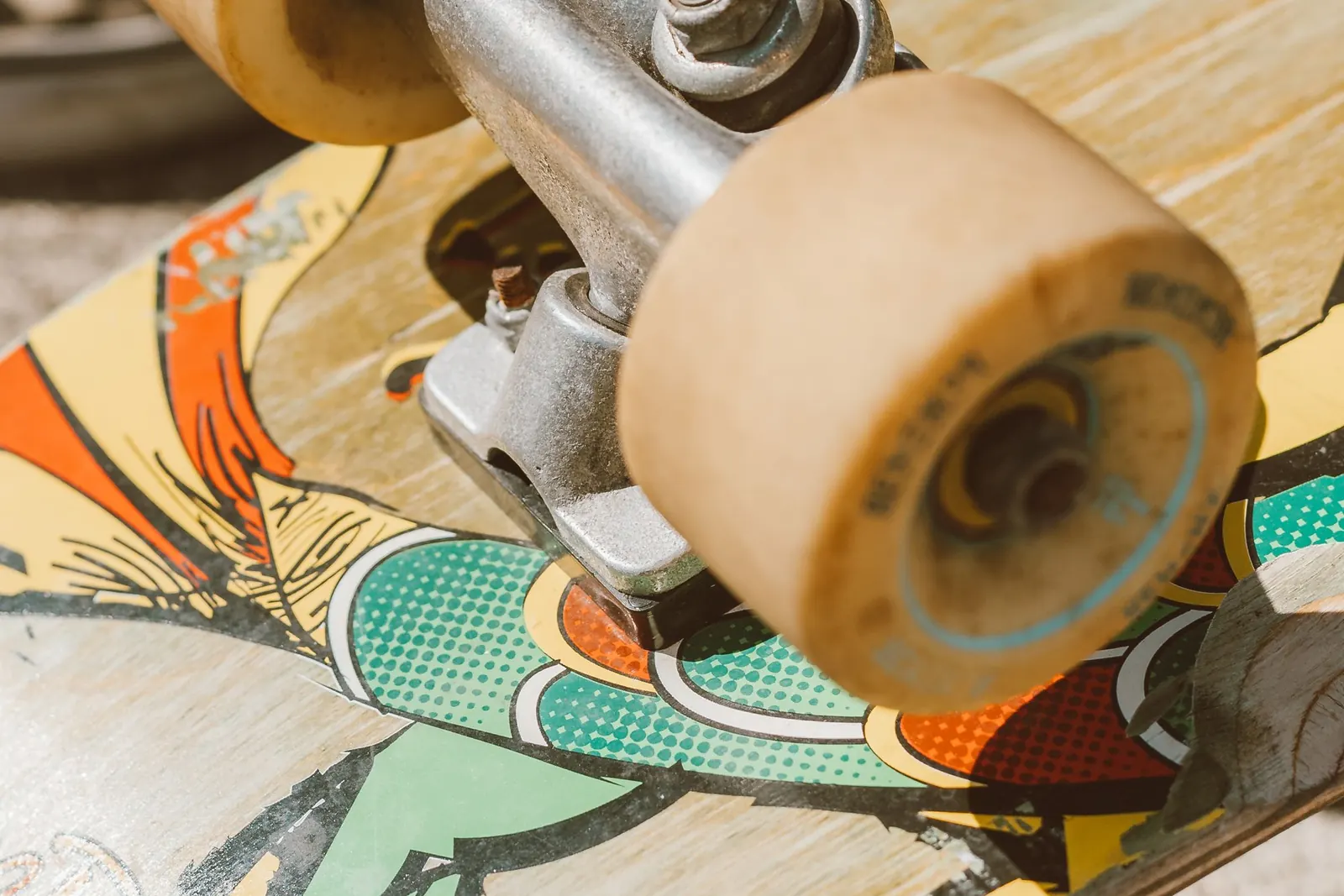
The baseplate is the part of the truck that bolts to the deck. Its angle decides how much the truck turns when you lean. A 50-degree baseplate is standard on cruising boards and turns readily. A 40 to 45 degree baseplate turns less for the same lean, so the board feels calmer at speed.
Some riders run a higher angle at the front and a lower angle at the rear. The front steers and the rear follows quietly. This is called a split setup.
Bushings
Bushings are the rubbery rings inside each truck. They control how easily the truck leans. Soft bushings are lovely for carving and risky at speed. For downhill, riders use firmer bushings matched to their weight. Heavier riders need harder ones.
Wheels
Downhill wheels are usually 70 mm or bigger. Look at the edge of the wheel. A sharp, square edge grips hard and holds a line through a corner. A rounded edge lets go more easily, which suits sliding. Hardness is usually in the high 70s to low 80s on the A scale.
📌 Check your hardware
Before any fast run, check that the truck bolts are tight, the axle nuts are snug and each wheel spins freely. A loose part that is merely annoying at low speed is dangerous at high speed.
Our picks: 3 boards for building toward downhill
One of these is a purpose-built speed board. The other two are budget boards with a low, stable layout that suit learning speed control at moderate speeds. They are not race equipment.
🔎 How we chose these
We picked these boards by the specifications listed on Amazon and by how well they fit the job. We have not ride-tested them, and we do not show prices or star ratings because they change often. Specs were checked in October 2026, so confirm the details on the product page before you buy. LongboardHub earns from qualifying purchases as an Amazon Associate, at no extra cost to you. Read our affiliate disclosure.
🏆 Best purpose-built pick
Shape illustration, not a product photo
Landyachtz Evo 40 Complete
Best for: Riders who already slide and foot brake well and want a real speed board.
The Evo is a purpose-built speed board. Its drop-down platform, 10-ply maple deck and 40-degree trucks are all there to keep it stable. The listing says the directional shape steers more at the front than the rear for control.
- Length 40 in
- Width 9.5 in
- Deck 10-ply Canadian maple, drop-down, directional
- Trucks Bear Gen 6, 40°, 155 mm
- Wheels 74 mm Plow King
✅ Why it works
- A stiff 10-ply deck does not flex at speed.
- Forty-degree reverse kingpin trucks are tuned for stability.
- The drop-down platform lowers your feet and helps with pushing.
- Wide-lipped 74 mm wheels are listed for traction.
⚠️ Keep in mind
- The listing marks its skill level as intermediate. It is not a beginner board.
- Stock was low when we checked, so availability may vary.
- Downhill riding needs full protective gear and a safe location.
Buy from Amazon Price and stock are shown on Amazon. Specs are from the Amazon listing, checked October 2026.
💰 Best budget drop-down
Shape illustration, not a product photo
Yocaher Professional Speed Drop-Down Longboard (41.25 in)
Best for: Riders who want a low, wide, stiff platform to practise on gentle hills.
A wide drop-down deck that puts your feet low between the trucks. The listing calls the shape comfortable, especially for beginners.
- Length 41.25 in
- Width 10 in
- Deck 9-ply maple, drop-down
- Trucks HD7 aluminum alloy
- Wheels 71 mm, 78A
- Bearings ABEC-9
- Listed weight limit 275 lb
✅ Why it works
- The drop-down platform is low and steady.
- A 10-inch-wide deck gives bigger feet room.
- Soft 71 mm, 78A wheels roll over small cracks and pebbles, according to the listing.
- The listed 275 lb weight limit is higher than many budget boards.
⚠️ Keep in mind
- A 9-ply maple deck is stiff, so it will not soak up bumps like a flexible board.
- It is sold in several finishes. Our link opens one of them.
- A very low deck has less ground clearance.
Buy from Amazon Price and stock are shown on Amazon. Specs are from the Amazon listing, checked October 2026.
🔧 Best budget drop-through
Shape illustration, not a product photo
Minority Downhill Maple Longboard (40 in)
Best for: Riders who want adjustable trucks and a low deck for learning slides.
A 40-inch maple drop-through with adjustable-angle trucks. Despite the name, treat it as a stable cruiser and commuter first, not as race equipment.
- Length 40 in
- Width 9 in
- Deck 8-layer cold-pressed maple, drop-through
- Trucks Forged aluminum, 45° to 55° adjustable
- Wheels 70 mm, 78A
- Listed weight limit 220 lb
✅ Why it works
- The drop-through deck sits low for stability.
- Adjustable 45 to 55 degree trucks let you tune how sharply it turns.
- An all-maple deck is stiffer than a bamboo one, which helps at speed.
⚠️ Keep in mind
- The listed weight limit is 220 lb.
- Stock was low when we checked, so availability may vary.
- It is a budget complete. Serious downhill riding needs purpose-built equipment and full protective gear.
Buy from Amazon Price and stock are shown on Amazon. Specs are from the Amazon listing, checked October 2026.
| Product | Deck type | Trucks | Best for | Amazon |
|---|---|---|---|---|
| Landyachtz Evo 40 | Drop-down, 10 ply | Bear, 40° | Committed downhill riders | View on Amazon |
| Yocaher Drop-Down 41 | Drop-down, 9 ply | Aluminum alloy | Practising on gentle hills | View on Amazon |
| Minority Maple 40 | Drop-through, 8 ply | 45° to 55° adjustable | Learning speed control and slides | View on Amazon |
How should you choose between them?
- You have the skills and the gear already: the Landyachtz Evo is the only true downhill board here.
- You are still building skills: the Yocaher drop-down or the Minority drop-through gives you a stable shape to learn on at low cost.
- You are a complete beginner: choose a general cruising board first and come back to this guide later.
How to progress safely in 5 steps
- Master the foot brakePractise on flat ground until you can stop smoothly from a fast push, every time.
- Carve to control speedOn a gentle slope, link wide turns from edge to edge. Each turn scrubs a little speed.
- Learn to slide at low speedWith slide gloves and pads, and ideally with experienced riders, learn a basic slide. This is your real brake at speed.
- Add speed slowlyMove to slightly steeper hills one step at a time. If a hill scares you, it is too steep for now.
- Tune your setupAs your speed rises, move to firmer bushings and lower-angle trucks. Change one thing at a time so you can feel what it does.
This order matters. Stopping comes before speed. Every experienced downhill rider learned to slow down long before they learned to go fast.
How to choose a hill to learn on
The hill matters as much as the board. A good learning hill makes mistakes cheap. A bad one makes them expensive. Look for these things.
- A gentle, even slope. You should be able to roll the whole thing without feeling you must brake. If your stomach drops when you look down it, find something mellower.
- A long, flat run-out. The bottom of the hill should flatten out and give you plenty of room to slow down naturally.
- No cross traffic. Avoid hills with junctions, driveways or blind corners. A quiet road with clear sight lines is essential.
- Clean, smooth tarmac. Gravel, wet leaves, potholes and manhole covers are all hazards at speed. Walk the hill first and look.
- Somewhere to bail out. Grass verges are kinder than kerbs and walls.
Ride the hill from part-way up first. Start a little higher each time, and only move up when the previous run felt easy. Bring a friend. One person can watch for cars while the other rides.
The gear you need
| Gear | What it does | Notes |
|---|---|---|
| Full-face helmet | Protects your head, face and jaw | Choose one certified for skateboarding or downhill use |
| Slide gloves | Let you put a hand down in a slide | Hard pucks on the palms take the wear |
| Knee and elbow pads | Protect joints in a slide or fall | Hard caps slide instead of grabbing |
| Padded shorts | Protect hips and tailbone | Worn under trousers |
| Leathers or abrasion-resistant clothing | Protects skin from road rash | Common at higher speeds |
Gear does not make a crash painless. It makes a crash survivable and lets you ride again the next day. Buy the helmet first and do not economise on it.
Real-life examples: which board would they choose?
The riders below are made-up examples, based on the kind of questions people often ask in longboarding groups and forums. They are not real people or reviews. See which one sounds most like you.
The careful learner
Priya, 5′5″, 135 lb
Priya has cruised for a year and wants to try a long, gentle hill near her home.
Good choice: a low, stiff drop-down or drop-through, firmer bushings, and a few sessions learning to foot brake and carve before anything steeper.
The slide student
Jake, 5′9″, 165 lb
Jake rides with a local group and is learning his first slides.
Good choice: a symmetrical drop-through with adjustable trucks. A drop-through breaks into a slide more easily, which helps while learning.
The committed rider
Elena, 5′7″, 150 lb
Elena already slides confidently in both directions and wants a faster, more precise board.
Good choice: a purpose-built downhill deck with 40 degree trucks, plus a full-face helmet and gloves if she does not already own them.
Common mistakes (and how to fix them)
❌ Riding hills on a flexible cruiser
Flex bounces at speed and soft trucks wobble.
✅ The fix: Use a stiff deck and firmer bushings, or keep the cruiser for flat ground.
❌ Going fast before learning to stop
Speed without a brake is the classic way to get hurt.
✅ The fix: Do not ride any hill faster than you can foot brake or slide to a stop.
❌ Standing too far back
Weight on the rear truck invites wobbles.
✅ The fix: Keep your weight over your front foot, with your knees bent.
❌ Wearing a half-shell helmet for real speed
An open helmet leaves your face and jaw exposed.
✅ The fix: Use a certified full-face helmet for downhill.
❌ Trusting the word downhill in a product name
Budget boards often use the word loosely.
✅ The fix: Judge the board by its stiffness, height and trucks, not its name.
Frequently asked questions
What is the best longboard for downhill?
The best downhill longboards have a stiff deck, a low or locked-in standing platform and reverse kingpin trucks with 40 to 45 degree baseplates. Those features keep the board stable and resist speed wobbles.
Are downhill longboards good for beginners?
No. Downhill is an advanced discipline. Beginners should learn to push, carve and foot brake on flat ground and gentle slopes first, then learn to slide at low speed before riding hills fast.
What causes speed wobbles on a longboard?
Speed wobbles usually start at the rear truck. A flexible deck, high-angle trucks, soft bushings, standing too far back and a tense body all make them more likely. A stiff deck, firmer bushings and weight over the front truck help prevent them.
Is a drop-through or top-mount better for downhill?
A drop-through or drop deck is lower and more forgiving, which suits riders who are learning. A top-mount gives more grip and sharper control, which is why experienced riders prefer it.
What safety gear do I need for downhill longboarding?
At a minimum: a certified full-face helmet, slide gloves, and knee and elbow pads. Many riders also wear padded shorts and leathers or other abrasion-resistant clothing.
Your downhill readiness checklist
If you cannot tick the first four boxes, work on those before you buy anything.
- I can foot brake to a stop from a fast push.
- I can carve to control my speed on a gentle slope.
- I own a certified full-face helmet, slide gloves and pads.
- I have a safe hill and people to ride with.
- My board is stiff, with no noticeable flex.
- My trucks and bushings are set up for stability.
- I have checked every bolt and nut before riding.
The best downhill longboard is stiff, low and stable. But the best downhill rider is patient. Build your skills in order, buy the helmet before the board, and the speed will come when you are ready for it.
Still deciding?
Not ready for hills yet? Find a stable first board with our free tools.
Try the free Size Guide Take the Match Quiz Back to our picks
Product specs and availability were checked in October 2026 and can change. Always confirm the details on the product page before you buy.