In this guide
Longboarding involves falls, and most beginners fall at some point. Protective gear will not stop that, but it makes the difference between a bruise and a hospital visit. Here is what to wear, how it should fit and what each piece is for.
Helmet
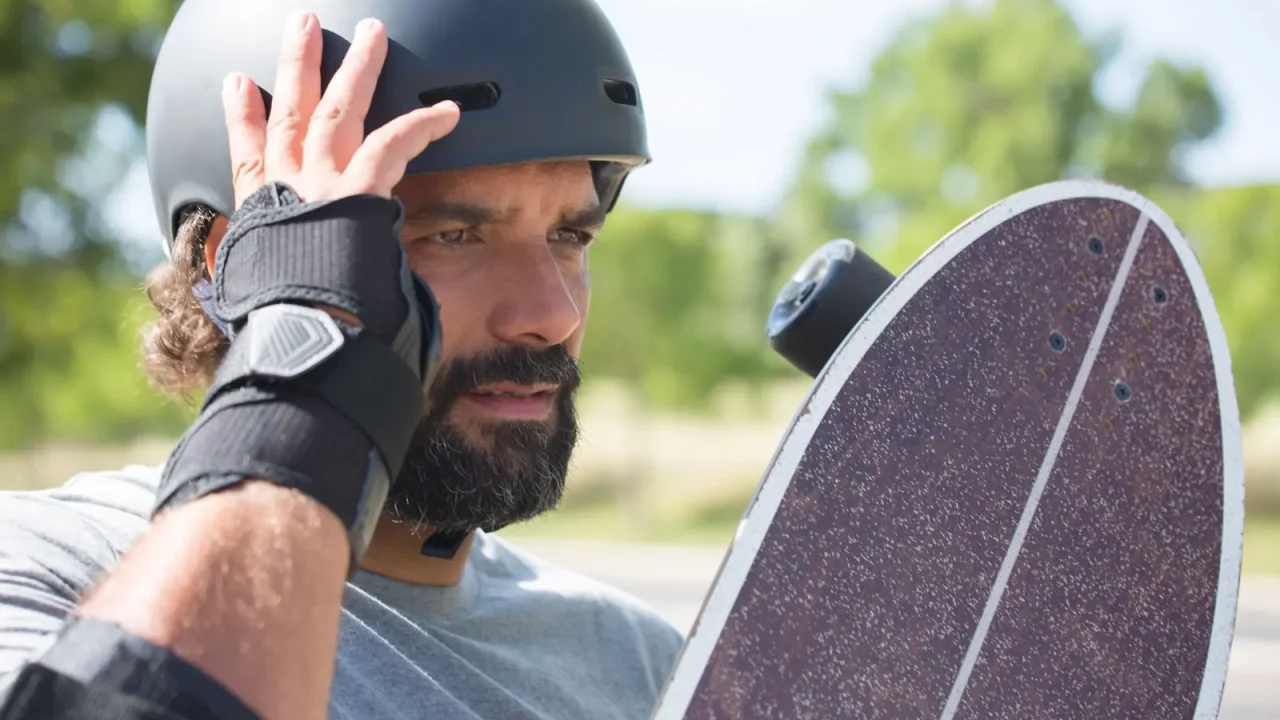
A helmet is the most important piece. Look for one that states it meets a recognised safety standard, such as ASTM F1492 for skateboarding or the CPSC standard for bicycle helmets in the US. The manufacturer should state this on the label or listing.
Fit matters as much as the standard:
- It should sit level on your head, not tilted back, with the front roughly two fingers above your eyebrows.
- The straps should form a V under each ear, and the chin strap should be snug.
- It should not move around when you shake your head.
Replace a helmet after a significant impact, even if it looks undamaged, because the protective foam can be compromised.
Wrist guards
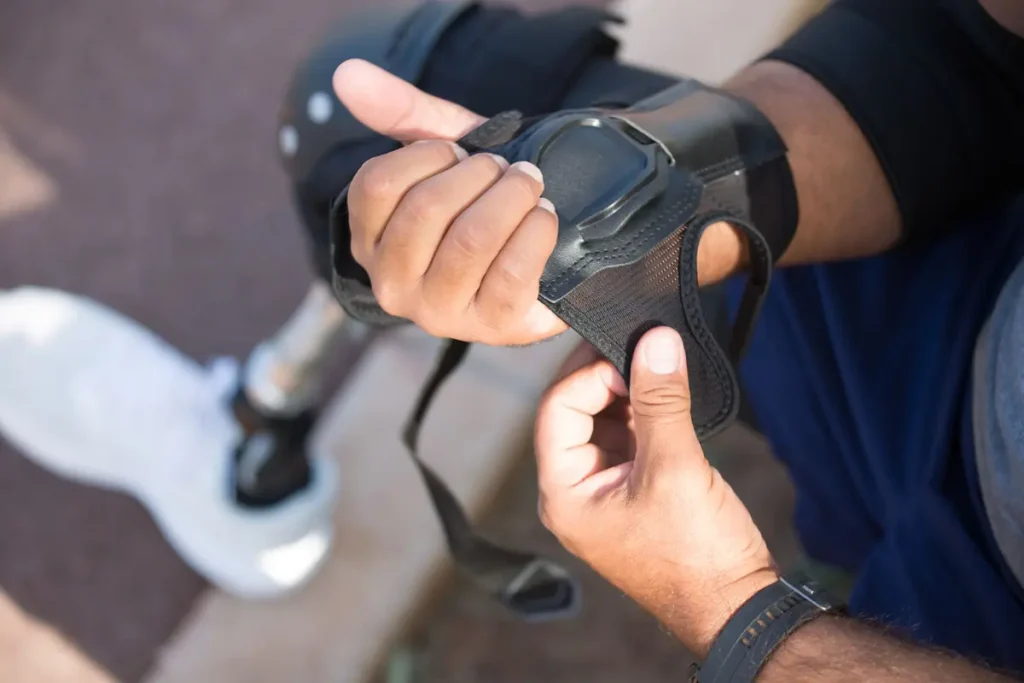
Falling onto an outstretched hand is one of the most common ways beginners hurt themselves, and wrists are easy to injure. Wrist guards with a rigid splint on the palm side help spread the force and slide along the ground.
Knee and elbow pads
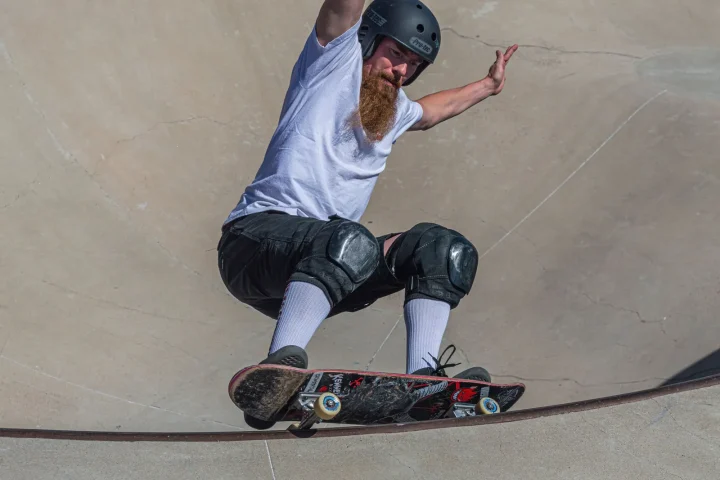
Pads protect joints that are easy to scrape and bruise, and that take a lot of impact. Choose pads that stay in place when you move, cover the joint fully and are comfortable enough that you will actually wear them.
Gloves
Regular gloves help with scrapes. Slide gloves, which have hard pucks on the palm, are made for sliding. They are for experienced riders learning that technique.
Shoes
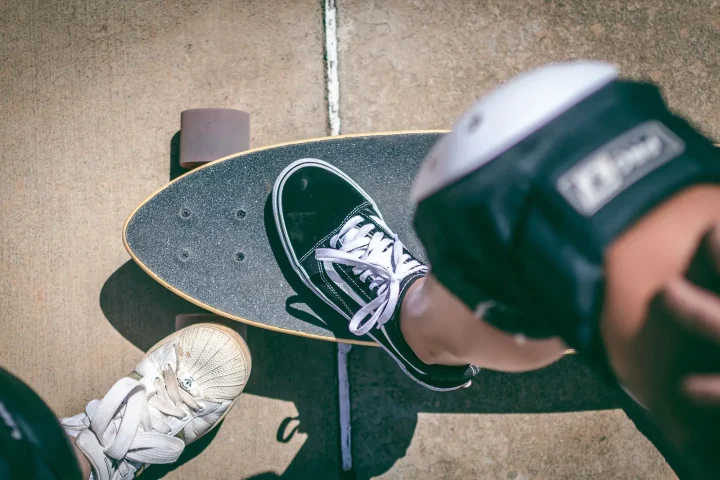
Wear closed shoes with flat soles. They give you grip on the board and let you foot brake. Avoid sandals and shoes with thick, curved soles.
Visibility
If you ride at dusk, in low light or near traffic, wear bright or reflective clothing and consider lights. You should avoid riding in traffic as a beginner.
What gear will not do
- It will not make a dangerous situation safe.
- It cannot make up for riding too fast or on terrain beyond your skills.
- It only works when it fits properly and is in good condition.
Buying gear
Buy gear that fits you, with the standard stated by the manufacturer, and replace anything that is damaged. You can browse options on our safety gear page and our helmets page.
See skate helmets on Amazon (opens Amazon in a new tab, affiliate link)
Related guides
Safety gear questions
Do I really need a helmet to longboard?
It is strongly recommended, especially while you are learning or riding anywhere with hard surfaces and traffic nearby. Head injuries are among the most serious outcomes of falls.
What is the most important piece of safety gear?
A properly fitted helmet. After that, wrist guards are especially valuable for beginners.
Can I use a bicycle helmet?
Many people do, provided it meets a recognised standard and fits properly. Skate-style helmets give more coverage at the back of the head, which can suit the way people fall when skating.