In this guide
Stopping is the skill that makes everything else on a longboard safer. You do not need to stop fast on day one, but you do need a reliable way to slow down and stop before you ride anywhere you cannot easily step off. These are the methods in the order most people should learn them.
Method 1: Foot braking
This is the simplest and most useful technique for beginners.
- Roll slowly on flat ground with your knees bent.
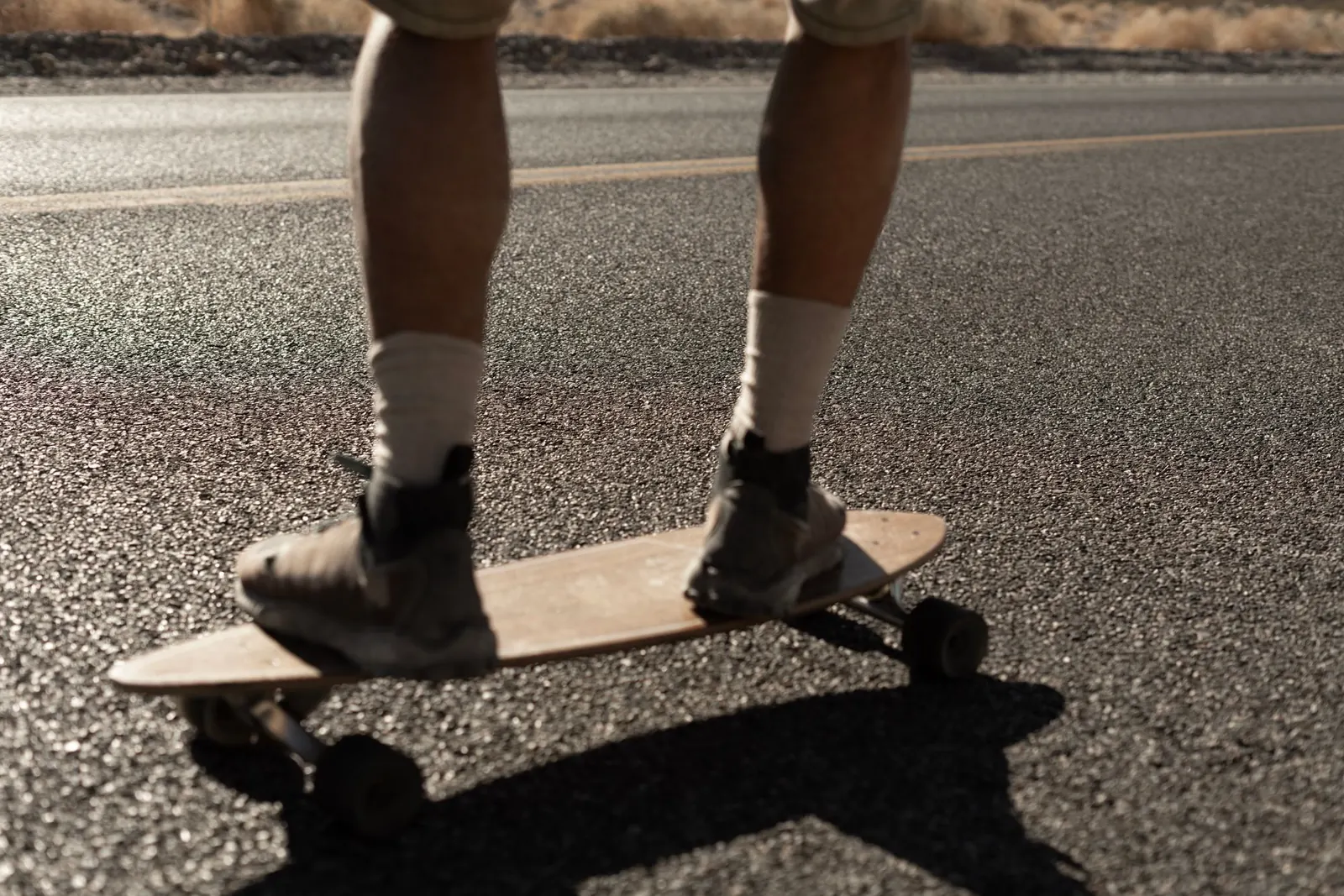
- Shift most of your weight onto your front foot, over the front trucks.
- Lower your back foot so the flat of your sole brushes the ground beside the board.
- Add pressure gradually. Dragging lightly slows you smoothly. Stamping hard can throw you forward.
- Once you are almost stopped, step off or step back on.
Tips:
- Flat-soled shoes work better than shoes with thick, curved soles, and they wear, so check them.
- Practise at walking speed first, then increase speed a little at a time.
- Practise on both sides if you can, so you are not stuck if your usual leg is not free.
Method 2: Carving to slow down
Leaning from heel to toe in wide S-shaped turns bleeds off speed. The tighter and more repeated the turns, the more you slow down. It is the next step after foot braking and also useful on gentle slopes. It needs a wide, empty space.
Method 3: Stepping off and running it out
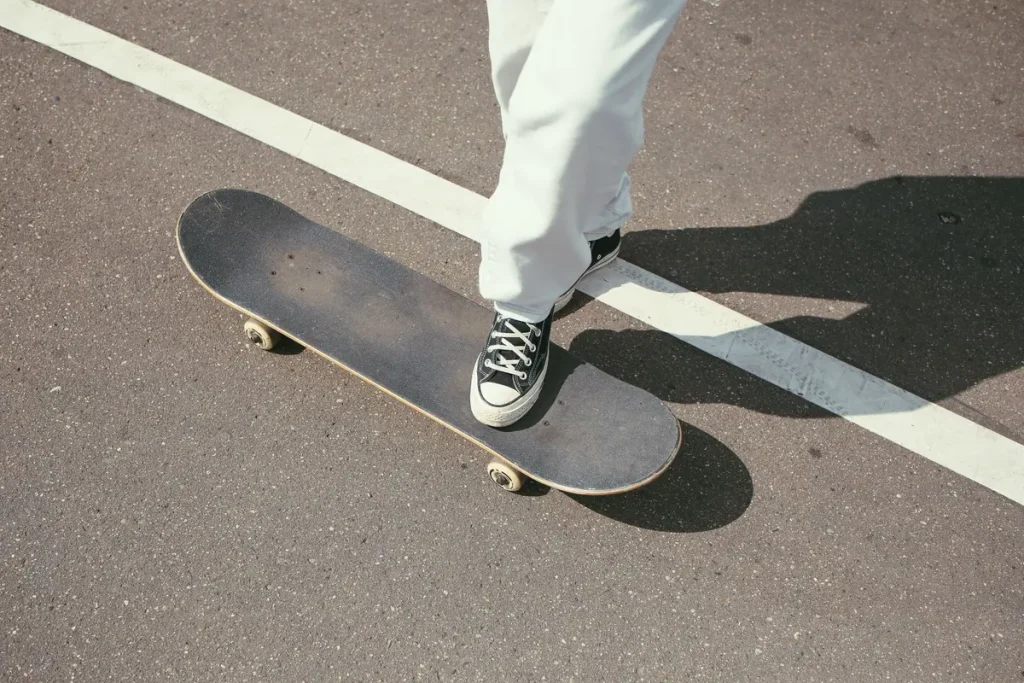
If you are moving slowly and cannot or do not want to foot brake, step forward off the board and keep your legs moving until you stop. It looks simple, and at low speed it is. It becomes difficult as you speed up, which is why you should not rely on it for anything fast.
Advanced: sliding
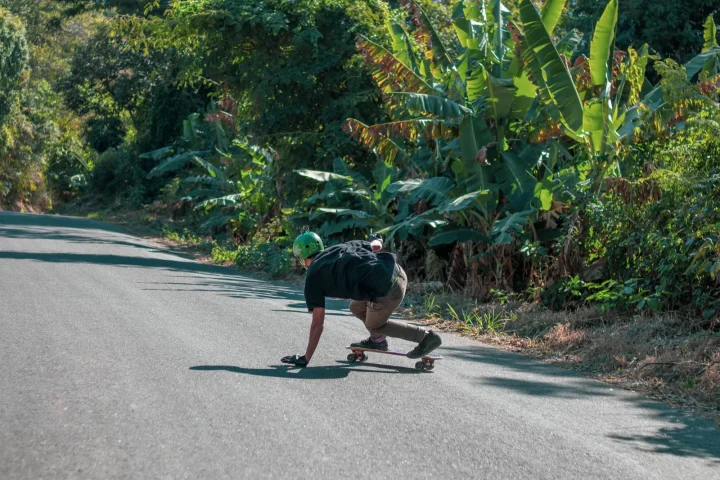
Sliding (turning the board sideways so the wheels skid) can scrub off speed quickly, but it is an advanced technique. It needs the right wheels, the right surface, slide gloves and full protective gear, and it is best learned in a controlled setting. It is not a beginner skill and is not covered here.
When foot braking is not enough
Foot braking has limits. On steep hills or at higher speeds your foot cannot create enough friction, and trying can cause a fall. If you cannot stop safely on a slope, avoid it. Know your route, ride within your ability and never ride where you cannot see a safe place to bail.
A short practice plan
- Foot brake from walking pace until it feels automatic.
- Increase speed in small steps, always stopping fully.
- Add carving to slow down on a gentle, empty slope.
- Only then consider gentle hills, and only where you can see a clear runout.
Related guides
Stopping questions
Can you stop quickly on a longboard?
Not as quickly as on a bicycle with brakes. Foot braking and carving slow you down gradually, which is why you should keep speed within your skill level and avoid riding where you cannot stop in time.
What is the easiest way to stop on a longboard?
Foot braking, by dragging the sole of your back foot on the ground while your weight stays on the front foot.
Should beginners learn to slide?
No. Sliding is an advanced skill. Master foot braking and carving first.